
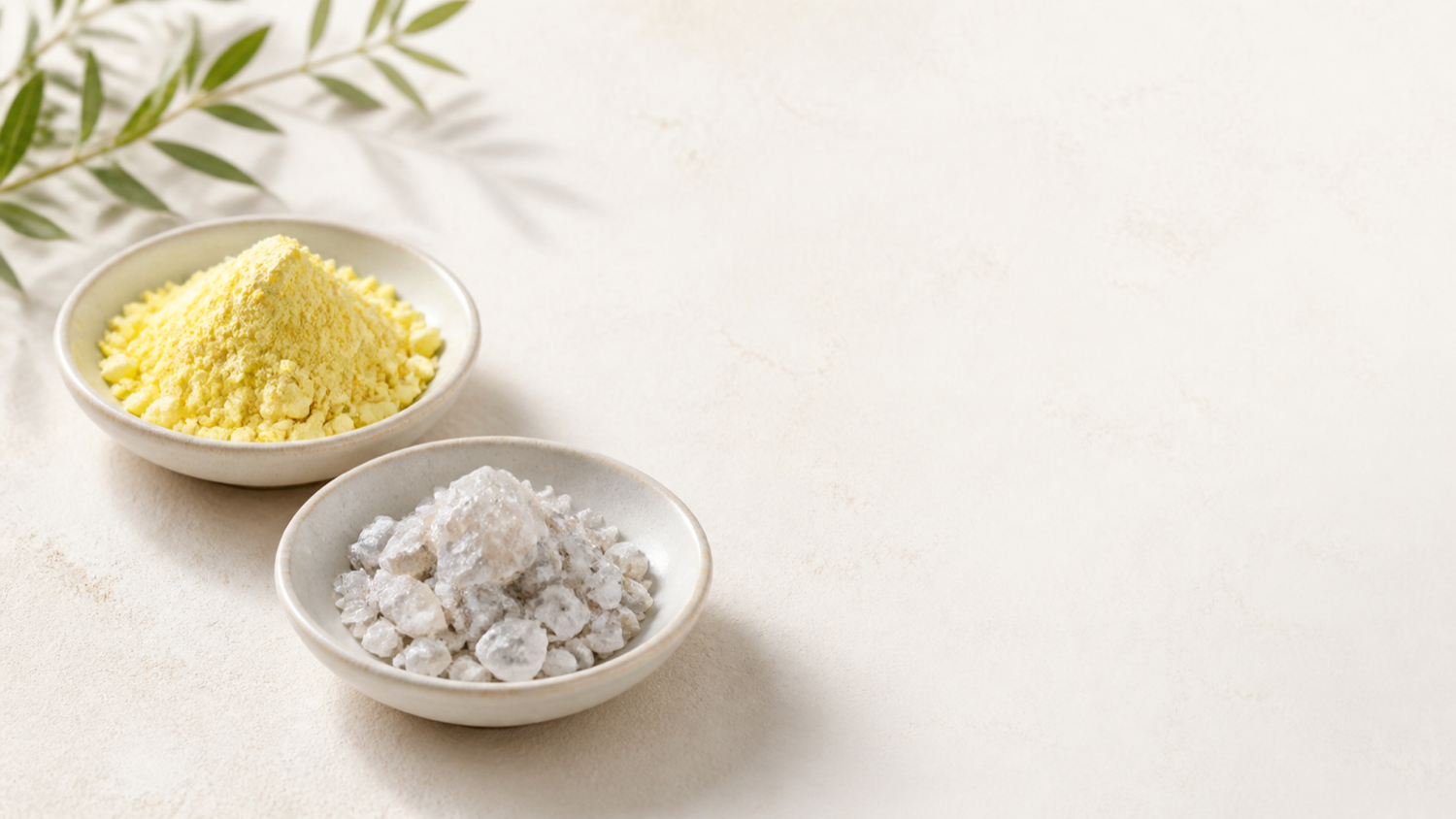
Let's start with the conclusion: DaFang is not raw sulfur powder.
DaFang is white-sulfur hot spring powder — made from Beitou white-sulfur spring tanghua (hot spring mineral crystals), ground directly and packed. Tanghua is not raw sulfur powder. White-sulfur hot spring powder is not industrial or agricultural sulfur powder.
The reason we say this upfront is that many people searching for "sulfur powder benefits" end up on the same results page seeing raw sulfur powder, Beitou white-sulfur spring information, tanghua articles, folk remedy claims, hot spring travel content, and commercially sold bath products all at once. These results all contain the word "sulfur," but they are not the same thing — and you cannot directly apply information from one category to another.
If you're trying to understand Beitou white-sulfur spring, tanghua, or considering a home bath or footbath product, the first step isn't to find a list of benefits. It's to clarify the terminology.
Why Does Searching "Sulfur Powder Benefits" Lead to So Much Confusion?
When you search "sulfur powder benefits," the results typically mix four different contexts.
The first is raw sulfur powder. This usually refers to industrial, agricultural, or raw-material sulfur powder — which may appear yellow and may show up in folk external-use contexts. This type of content is not a bath product guide, and is not a guide to using hot spring minerals.
The second is sulfur spring / white-sulfur spring bathing knowledge. These articles discuss actual spring sources, water composition categories, bathing environments, and travel experiences. A hot spring resort has a dedicated spring source, temperature control, dilution ratios, and on-site conditions — none of which can be directly equated with a packaged home bath product.
The third is tanghua. Tanghua are mineral crystals that precipitate out of hot spring water under specific conditions. Beitou white-sulfur spring tanghua may appear white, pale gray, or powder-like — so visually it's easy to conflate with what most people picture when they hear "powder." But tanghua is not raw sulfur powder.
The fourth is commercially sold bath additives. Bath powders, bath salts, bath bombs, onsen powder, and white-sulfur hot spring powder may all appear on the same search results page. But each has different ingredients, purposes, scent profiles, dissolution behavior, and claim boundaries.
So the confusion isn't your fault — this search term simply lumps many different things together.
What Is the Relationship Between DaFang and Tanghua?
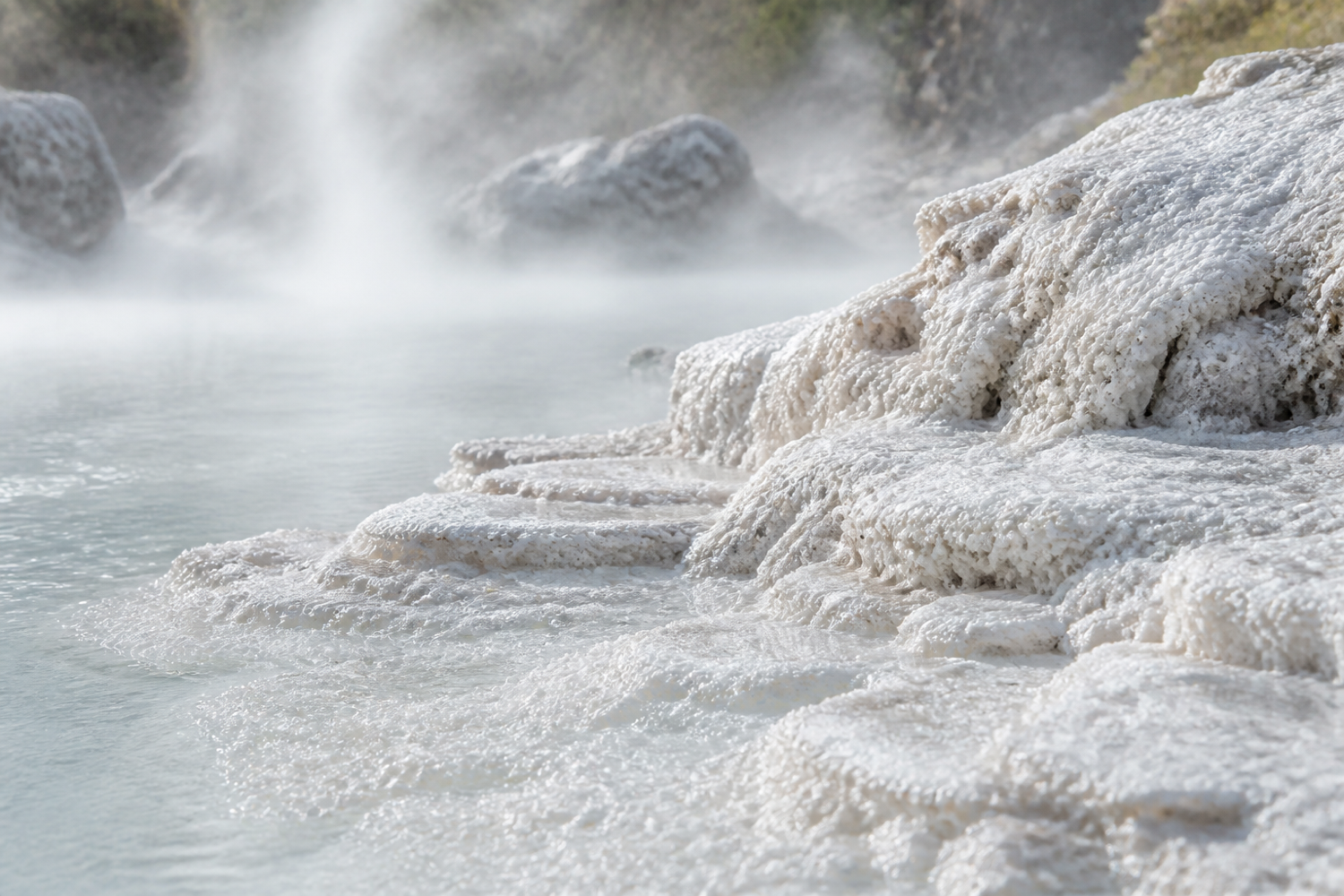
DaFang Bai Fen Chang (大芳白粉廠) was established in 1956. The raw material comes from tanghua crystals that precipitate from the Beitou white-sulfur spring (北投白磺泉) during its concentration process. These crystals are then ground and packed to create white-sulfur hot spring powder suitable for home bathing, half-body baths, and footbaths.
Beitou White Sulfur Spring — Quick Facts
| Spring type | White sulfur spring (Beitou "baihuang") |
| Appearance & scent | Milky-white, semi-opaque water with a natural sulfur scent |
| Source pH | ≈ 3.2–3.5, mildly acidic (Sulfur Valley source, official tests Jan–Apr 2026) |
| Source temperature | ≈ 56–59°C (same official tests) |
| Source water quality | Total plate count 6–34 CFU/mL, coliforms <1 MPN/100mL — far better than the hot-spring bath standard (<500 CFU/mL, ≦6 MPN/100mL) |
| How yunohana forms | As spring water cools after surfacing, dissolved minerals become supersaturated and crystallize into white mineral deposits — this is yunohana. DaFang grinds and packs these crystals with no added fragrance, dye, or preservative. |
| Why batches vary slightly | Yunohana is a naturally deposited mineral, not a synthesized chemical. Its composition fluctuates with the spring itself — a proof of being natural, not a defect. |
Source: official Beitou hot-spring source water-quality reports (Jan–Apr 2026, Sulfur Valley source). This box describes the spring's background and physical properties — it is not a product ingredient label or a claim of therapeutic effect.
One Table to Tell the Four "Sulfurs" Apart
| Term | What it is | Typical context | Safe for home bathing? |
|---|---|---|---|
| Raw sulfur powder | Industrial/agricultural sulfur, usually a yellow powder | Agriculture, industry, folk remedies | No. Not a bath product — do not mix or apply to skin |
| Sulfur hot spring | Natural spring water containing sulfur compounds | Onsen resorts, travel articles | Bathe on site; spring conditions don't transfer to home products |
| Yunohana | Natural mineral crystals deposited as spring water cools | Japanese "湯の花", Beitou local specialty | A bath ingredient, after proper processing and grinding |
| White sulfur spring powder (DaFang) | Beitou yunohana crystals, ground and packed as a bath product | Home bath, half bath, footbath | Yes. Follow the official usage guide |
To put it simply:
- DaFang is not raw sulfur powder
- Tanghua is not raw sulfur powder
- DaFang is not unrelated to tanghua — DaFang uses Beitou white-sulfur spring tanghua as its raw material
- The background of Beitou white-sulfur spring helps explain the source, but it cannot be rewritten as a guaranteed product efficacy claim
This is also why DaFang has a natural white-sulfur mineral scent, white-cloudy water appearance, and mineral sediment. These are expected characteristics of a natural mineral bath product — not a fragrance-type bath additive or a fully clear-dissolving product.
Tanghua and Raw Sulfur Powder Look Similar — Are They the Same Thing?
No.
Raw sulfur powder is typically used in industrial or agricultural contexts. Its uses, purity levels, application methods, and safety boundaries are completely different from a home bath product. Do not take raw sulfur powder usage instructions found online and apply them to bathing, DIY mixing, or skin contact.
Beitou white-sulfur spring tanghua is a mineral crystal formed from hot spring water under specific conditions. The key characteristic is not "pure sulfur" — it is the mineral crystal background produced within the Beitou Thermal Valley (地熱谷) geothermal and white-sulfur spring environment.
Similar appearance does not mean the same purpose. Having "sulfur" in the name does not mean they can be substituted for each other.
Can White-Sulfur Spring / Tanghua Background Directly Equal Product Efficacy Claims?
No.
External hot spring research or hot spring resort articles describe experiences at specific spring sources, concentrations, temperatures, and bathing environments. Information about raw sulfur powder is in yet another raw-material context. Neither type of content can be directly converted into efficacy promises for the DaFang product.
What DaFang can honestly state:
- Raw material source: Beitou white-sulfur spring tanghua
- Use context: bath, half-body bath, footbath
- Sensory experience: natural white-sulfur mineral scent, white-cloudy water, mineral powder texture
- Normal characteristics: does not dissolve completely; white or gray-white sediment may remain after use
What DaFang should not claim:
- Treats disease
- Improves inflammation or skin disease
- Antibacterial or detoxifying
- Improves circulation
- Guarantees better sleep
- Relieves pain, edema, or fatigue
This isn't about being overly conservative — it's about clearly separating "source knowledge" from "product claims." Keeping these separate means you're less likely to buy the wrong product, use it incorrectly, or apply unsuitable information to your own situation.
What Is a Bath Additive? Which Category Does White-Sulfur Hot Spring Powder Belong To?
A bath additive is a general term for products added to bathwater or footbath water. Common types on the market include:
- Fragrance bath powders and bath bombs
- Mineral salts and bath salts
- Carbonated tablets and chemically formulated bath additives
- Natural hot spring mineral products
DaFang white-sulfur hot spring powder is a natural hot spring mineral product. It is not a fragrance-type product, and it is not a bath additive designed to showcase strong scent, color, or bubbles. Its character is closer to "bringing Beitou white-sulfur spring tanghua minerals home for everyday use."
So before your first use, there are three things worth knowing:
- It has a natural white-sulfur mineral scent — not a perfume scent
- The water may turn white-cloudy, and sediment may settle at the bottom
- Natural minerals don't dissolve and disappear the way chemical solvents do
First Time Wanting to Experience the Beitou White-Sulfur Hot Spring Feeling — What's a Low-Pressure Way to Start?
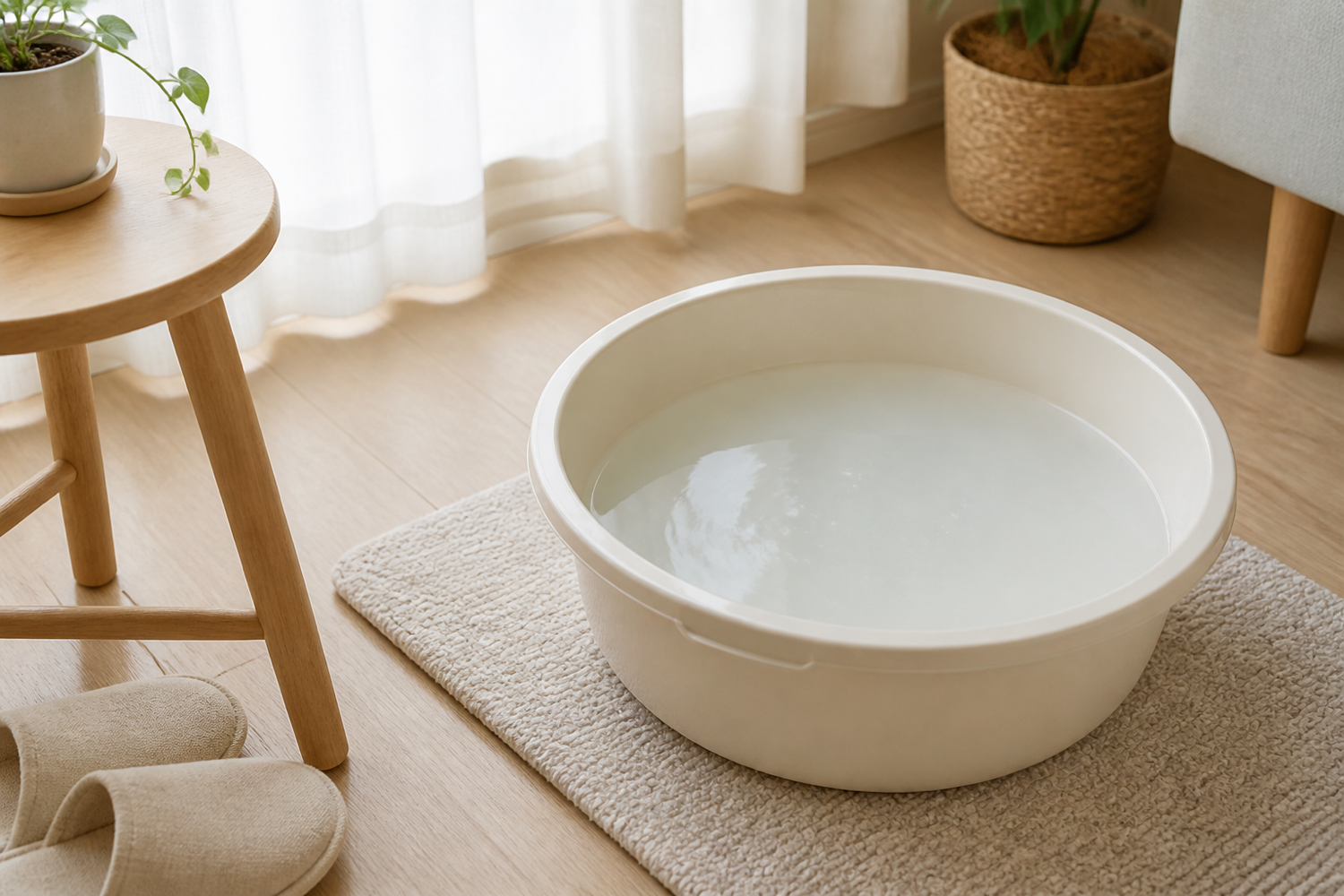
If this is your first time using DaFang, there's no need to overthink it.
Three suggested starting points:
-
Read the how-to guide first
Water temperature, amount to use, differences between full bath and footbath — check the official usage guide first for safer results.
How to Use White-Sulfur Hot Spring Powder — Official Usage Guide -
Start with a small amount
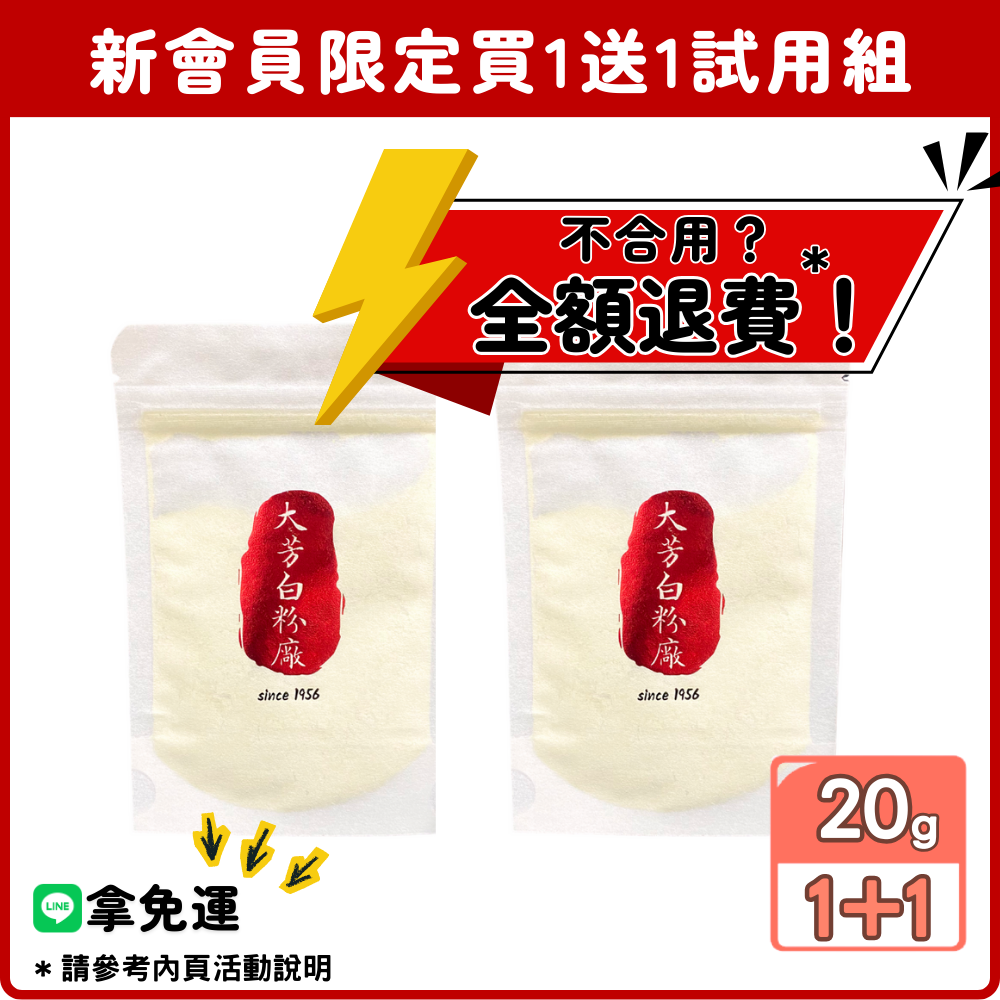
There's no need to buy the largest package right away. If you want to confirm whether you like the white-sulfur scent, white-cloudy water, and mineral texture, consider the trial pack or single-use pack first. -
Accept sediment as normal
If you see some white or gray-white sediment after your bath, it doesn't mean the product has gone bad — and it's not an indicator of effectiveness. This is a natural characteristic of mineral powder. Simply rinse the tub or footbath basin clean after use.
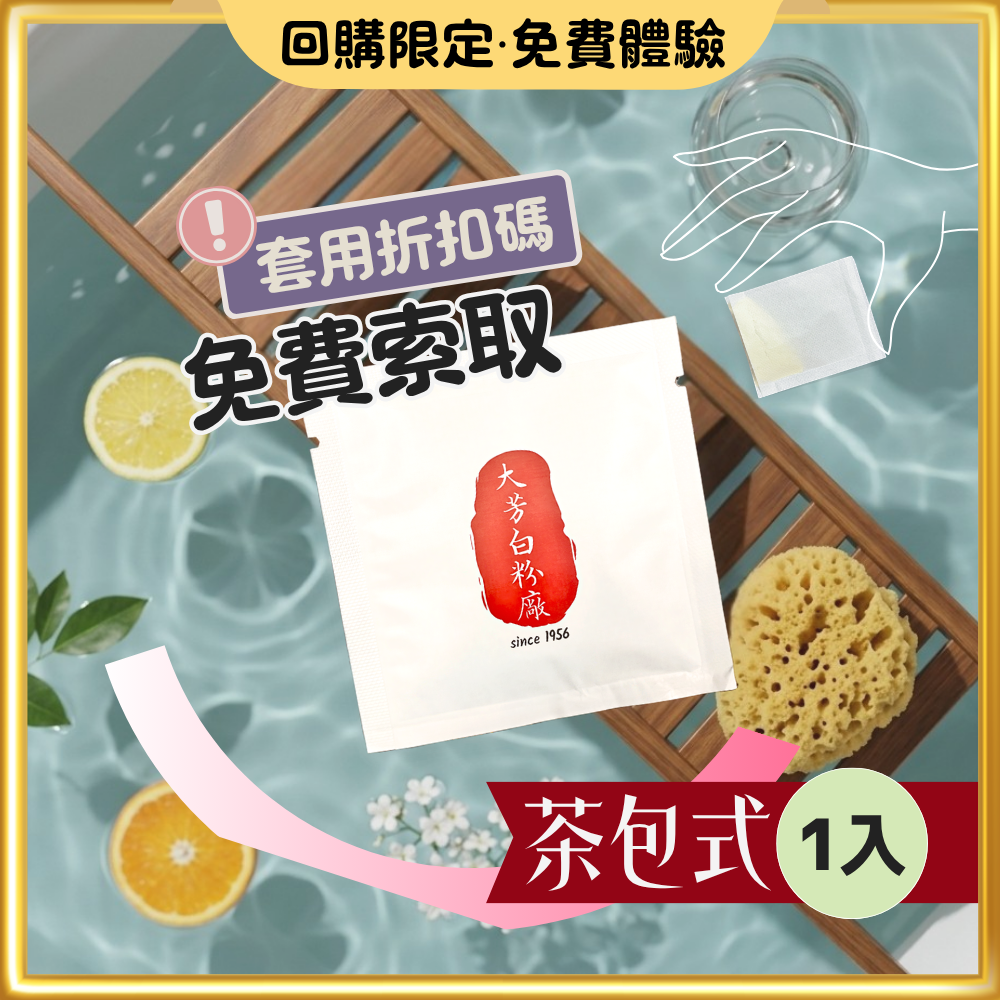
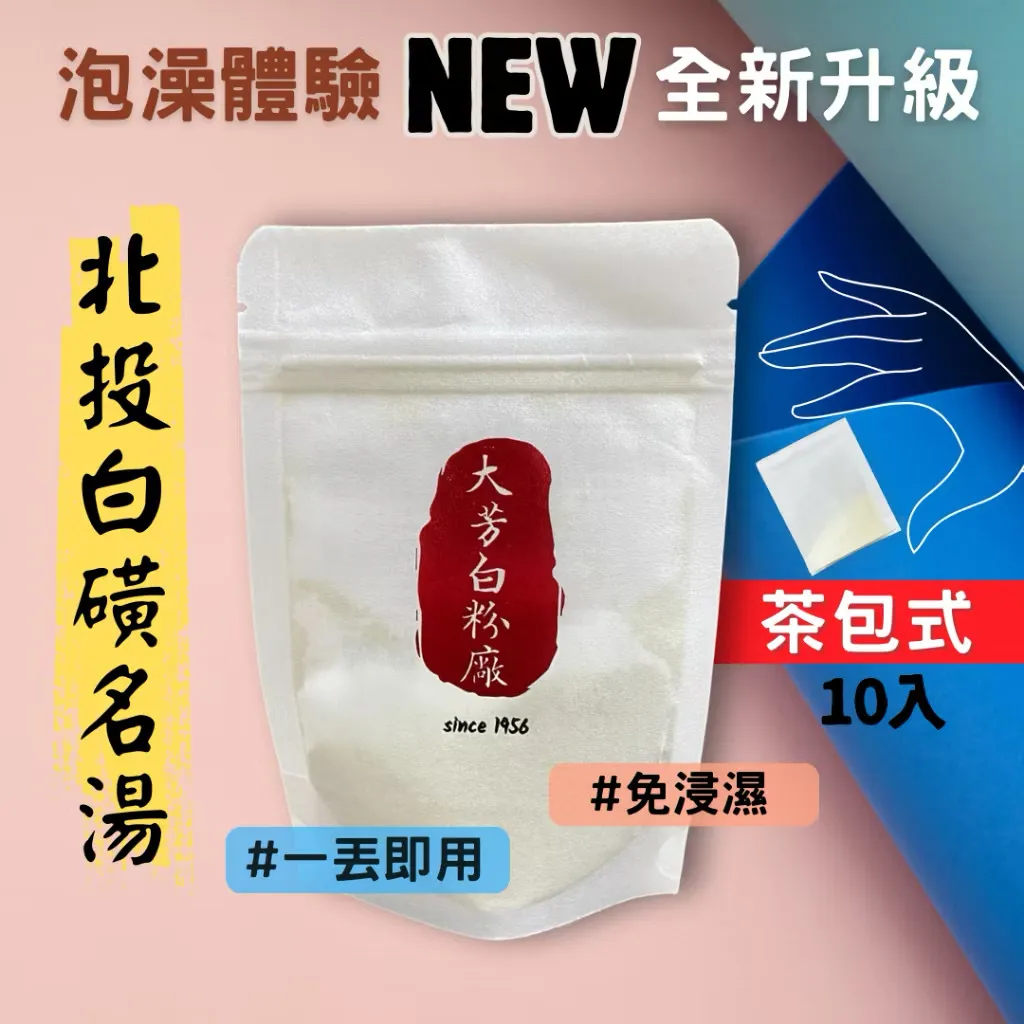
If you'd prefer easier handling during and after use, the improved tea-bag format (drop and squeeze) may suit you. The tea-bag format isn't about turning minerals into a scented sachet — it just makes daily use and cleanup more convenient.
FAQ: Common Questions About Sulfur Powder, Tanghua, and White-Sulfur Hot Spring Powder
Q1: Why does searching "sulfur powder benefits" lead to so much confusion?
Because search results regularly mix raw sulfur powder, sulfur spring bathing knowledge, Beitou tanghua, folk remedy claims, and bath additive products on the same page. All of these may contain the word "sulfur," but they come from different source contexts, serve different purposes, and have different claim boundaries — they cannot be directly applied to one another.
Q2: Is DaFang 1956's white-sulfur hot spring powder sulfur powder?
No — not in the raw sulfur powder sense. DaFang is white-sulfur hot spring powder made from Beitou white-sulfur spring tanghua, ground directly and packed, for use in full baths, half-body baths, or footbaths. It is not the industrial, agricultural, or folk external-use raw sulfur powder found in other search contexts.
Q3: What is the relationship between DaFang and tanghua?
DaFang's raw material comes from Beitou white-sulfur spring tanghua. Tanghua are mineral crystals formed from hot spring water under specific conditions. DaFang grinds and packs these crystals into white-sulfur hot spring powder for home use.
Q4: Tanghua and raw sulfur powder look very similar — are they the same?
No. Tanghua is a hot spring mineral crystal. Raw sulfur powder belongs to a different raw-material context. Both may appear as fine powder, but similar appearance does not mean the same ingredient context, use case, or safety boundary.
Q5: Can Beitou white-sulfur spring / tanghua background directly equal product efficacy?
No. The Beitou white-sulfur spring and tanghua background helps explain the source and mineral characteristics, but it cannot be directly rewritten as product efficacy. DaFang can describe its source, scent, white-cloudy water, mineral sediment, and usage — it should not claim treatment, sleep improvement, improved circulation, detoxification, or relief of disease.
Q6: After bathing, I see sediment or powder texture — does that mean it worked?
Sediment is not an indicator of effectiveness. DaFang is a natural mineral powder. After adding it to water, it may create white-cloudy water and leave white or gray-white sediment — this is a normal usage characteristic. Simply rinse your container after use.
Q7: First time wanting to experience the Beitou white-sulfur hot spring feeling — how should I start?
Check the official usage guide first, then start with a small amount. To confirm whether you like the white-sulfur scent and mineral texture, consider the trial pack or single-use pack first.
Q8: Can I combine sulfur powder usage instructions with hot spring bath product usage instructions?
Not recommended. Search results for "sulfur powder usage methods" typically point to raw-material, agricultural, industrial, or folk external-use contexts — which are different from a home bath product. When using DaFang white-sulfur hot spring powder, follow the official usage guidelines; do not apply raw sulfur powder instructions on your own.
Conclusion: Clarify the Terminology First, Then Start Small
Searching "sulfur powder benefits" isn't a mistake — many people start their research this way. But once you find information, what truly matters is distinguishing what you're reading about: raw sulfur powder? Hot spring water knowledge? Tanghua background? Or a bath product?
DaFang is not raw sulfur powder. DaFang is white-sulfur hot spring powder made from Beitou white-sulfur spring tanghua, ground directly and packed.
If you want to experience the mineral hot spring feeling of Beitou white-sulfur spring, start with the lower-commitment options:
- Learn how to use it first: How to Use White-Sulfur Hot Spring Powder — Official Usage Guide
- Confirm if you like it: Trial pack
- Occasional use, no stockpiling: Single-use pack
- Prefer easier cleanup: Improved tea-bag format (drop and squeeze)
Clarify the terminology first. Start small. That's the least likely way to buy the wrong product — and the easiest way to find out whether you genuinely enjoy this kind of natural white-sulfur mineral bath experience.
Further Reading
If you want to continue with practical usage, first-time product choice, and the difference between natural white-sulfur tanghua powder and common bath additives, read these next: