
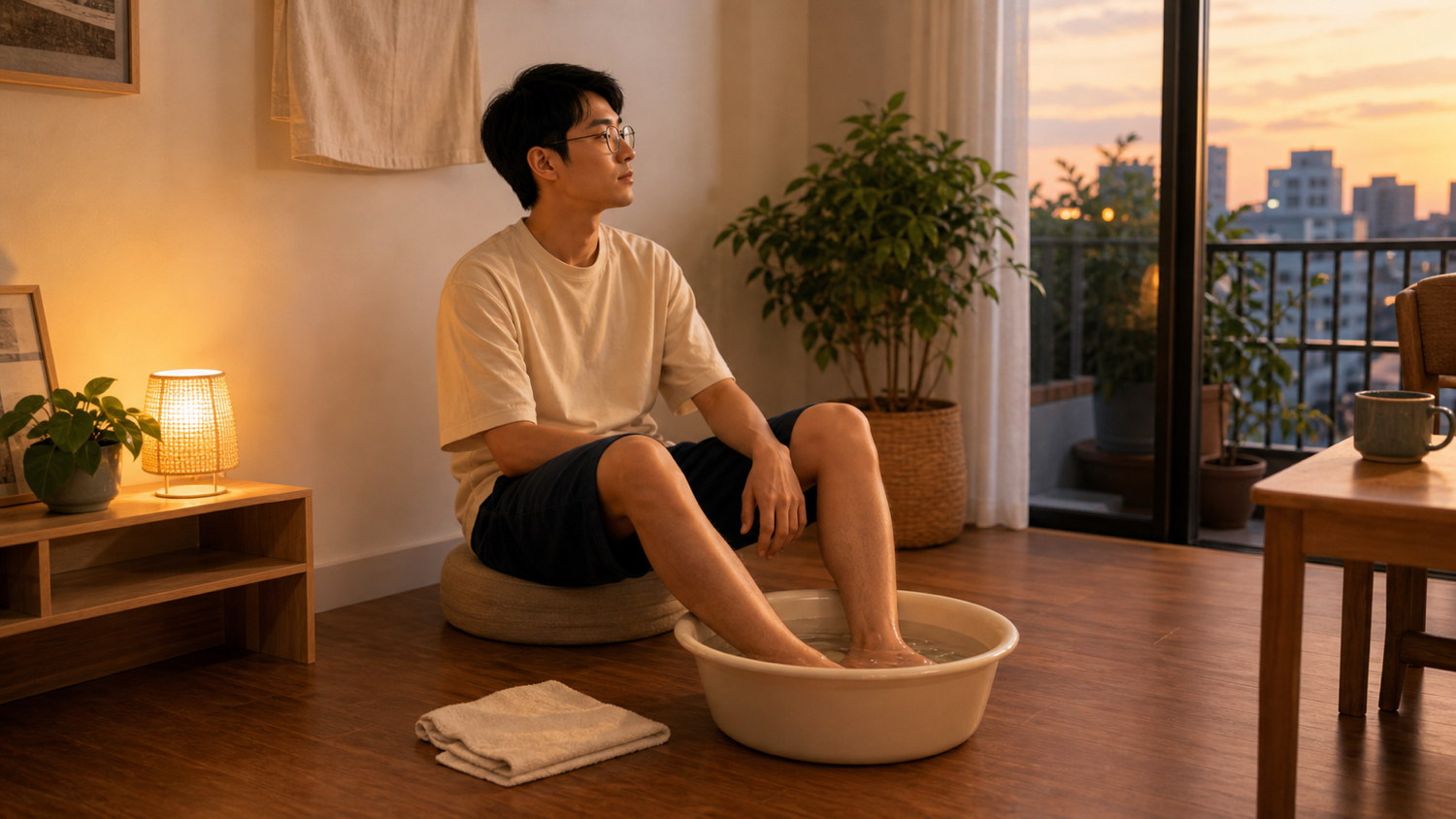
Spending your whole day cycling between air conditioning and outdoor heat is a familiar kind of exhaustion for Taiwan summers.
Morning in an air-conditioned office. Stepping out into a heat wave for lunch. Back inside to the cold air again. An afternoon errand leaves you sweaty. By the time you get home at night, your body has sat down — but you still feel like you're somewhere out there.
A footbath isn't a miracle fix, and it's not a wellness ritual everyone needs. It's more like a small "shift switch": a basin of water at a temperature you choose, a quiet signal to let the day's pace slowly settle.
This isn't a list of "ten benefits of foot soaking." It's written for a specific kind of person: you spent today cycling through air conditioning and outdoor heat, you want a simple way to close out the day, but you might not have a bathtub, and you don't want to set up a whole system.
We'll get straight to it: summer footbath water temperature, water level, whether a regular basin works, no-bathtub options, and — if you want to try DaFang white-sulfur onsen powder for the first time — which format has the lowest barrier to entry.
Your summer body keeps switching
Taiwan summer outdoor temperatures often hover around 35°C (95°F), while indoor air conditioning might sit at 24–26°C. Over the course of a day, your body moves in and out of this temperature gap multiple times.
This isn't necessarily illness, and it doesn't need to be dramatized. But many people recognize the feeling: heavy feet, slightly weighted legs, skin that swings between dry and sticky, and by night, a sense that "my body hasn't clocked out yet."
A footbath's entry point is simple: give yourself a stretch of time where you actively choose the temperature.
Not to force your body to sweat, and not to compensate with scalding water. Summer footbaths work better on the gentle side: water doesn't need to be very hot, the time doesn't need to be long, and the container doesn't need to be specialized. The point is to move from a full day of passive temperature-switching into something more stable and controlled.
Can I soak my feet in summer? The water doesn't need to be as hot as winter
Many people hear "summer footbath" and immediately think: "It's already so hot — why would I soak?"
Summer footbaths work on a different logic from winter ones.
In winter, footbaths feel cold because the environment is cold, so water temperature runs higher to create that "warming up" feeling. In summer, when it's already warm, you don't need to push yourself into scalding water. The better approach is to find a water temperature that feels comfortable, mild, and lets you sit still.
Start around 38 to 40°C (100–104°F).
No thermometer needed. Test with the inside of your wrist — it's more sensitive than the back of your hand. If it feels "clearly warm but you don't have to pull away," that's your starting point. If you immediately want to flinch back, it's too hot.
Time doesn't need to be long. For summer daily footbaths, start with 10 to 15 minutes. If your feet feel warm and your body's pace slows a little by the end, that's enough. No need to push until you're sweating through your shirt.
For a closer look at judging water temperature: see the canonical 41°C footbath temperature guide: How warm is a 41°C footbath?
Small-volume footbath: how high should the water be?
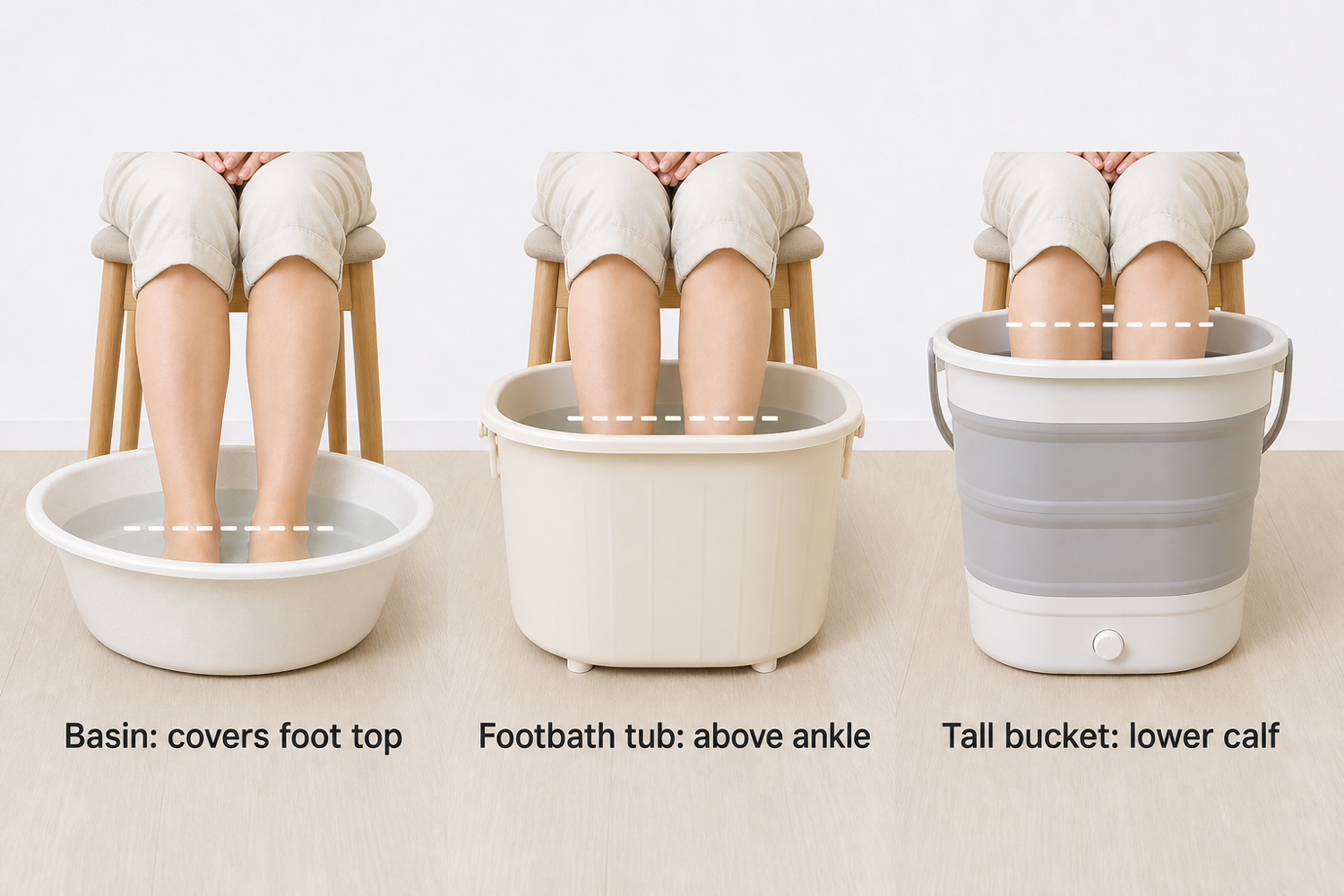
A footbath doesn't mean a big bucket of water.
For an everyday starting point, water that covers the tops of your feet and reaches your ankle is enough to begin. If you want warmth along the lower calf as well, use a deeper footbath basin.
A simple guide:
| Water level | Best for | Container |
|---|---|---|
| Covers foot top / near ankle | First-time use, summer daily wind-down | Regular basin |
| 5–10 cm (2–4 in) above ankle | Warmth along lower calf | Deeper footbath tub |
| Near the calf | Long-term regular habit | Tall footbath bucket |
If you're just starting a small end-of-day ritual for summer, a regular basin works fine.
A standard basin at half capacity usually covers the foot tops to ankle. Pour in a kettle of hot water, add cold water until the temperature feels right. The advantage of small-volume: fast to set up, fast to clean up, low water use — easier for rental apartments or studio residents.
No need to rush into buying a footbath machine or a tall wooden tub. Try it once with whatever container you have at home. Once you're sure the habit fits you, then decide whether to upgrade.
Can I use DaFang white-sulfur onsen powder without a bathtub?
Yes.
A footbath has nothing to do with a bathtub. Bathtubs are for full-body or half-body soaks. A footbath only needs a container your feet can fit into.
For people without a bathtub, footbaths are actually the easier way to start:
- Less water, less setup time
- Pour it out, rinse the container, done
- Works in the living room, bathroom doorway, or bedroom corner
- No bathroom renovation, no fixed equipment needed
If you want to add DaFang white-sulfur onsen powder to your water, keep one principle in mind: the water volume for footbaths is much less than a full bathtub — so your powder amount should also be less.
Start small the first time, and adjust based on your container size, water volume, and how the experience feels. Don't use the full bathtub dosage, and don't treat any fixed ratio as the rule for all containers.
For complete usage instructions: White-sulfur onsen powder: official usage guide
First time trying DaFang for a footbath: which format to start with?
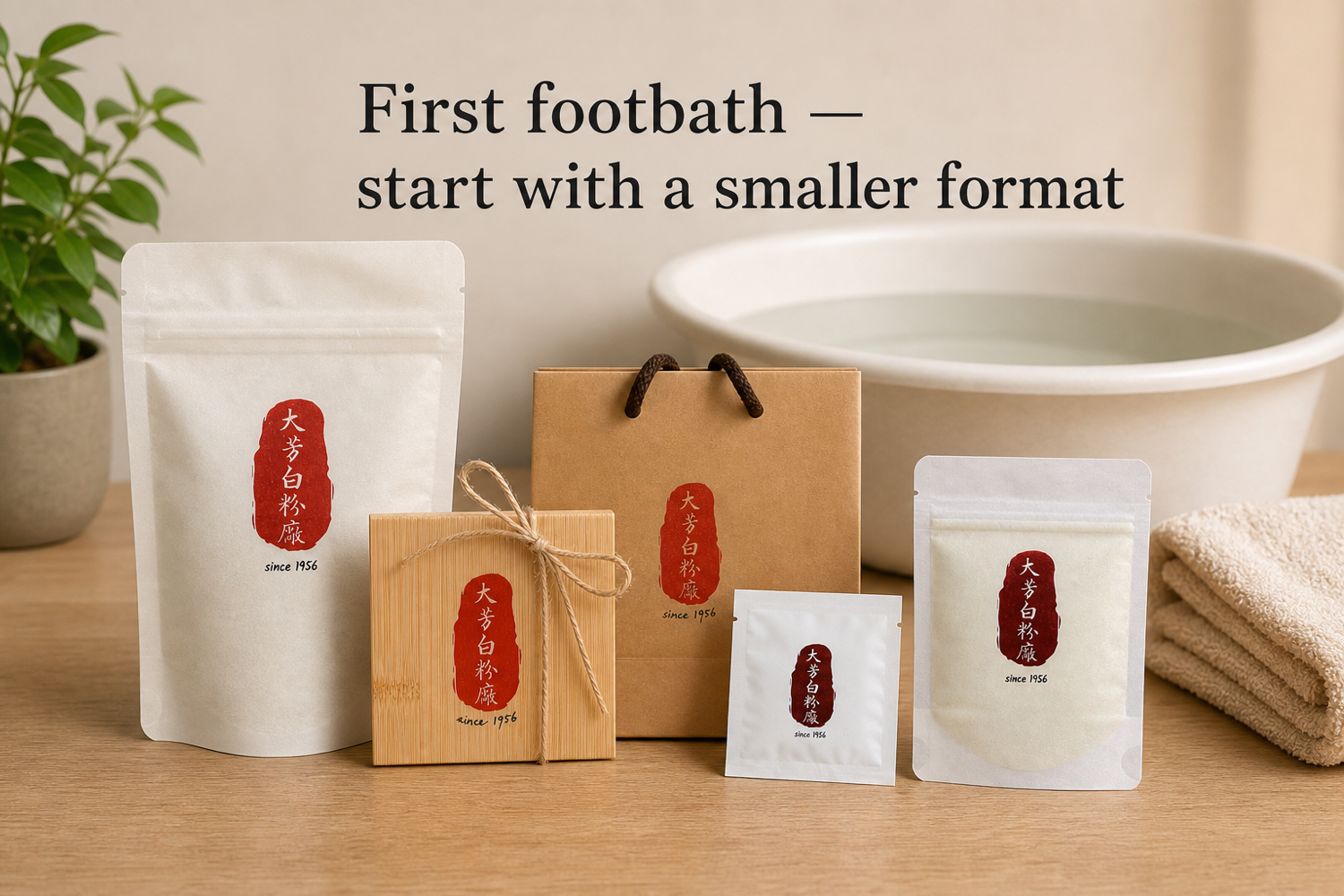
If it's your first time using DaFang white-sulfur onsen powder for a footbath, start with a low-barrier format — no need to go large on your first order.
| Format | Best for | Footbath dosage note |
|---|---|---|
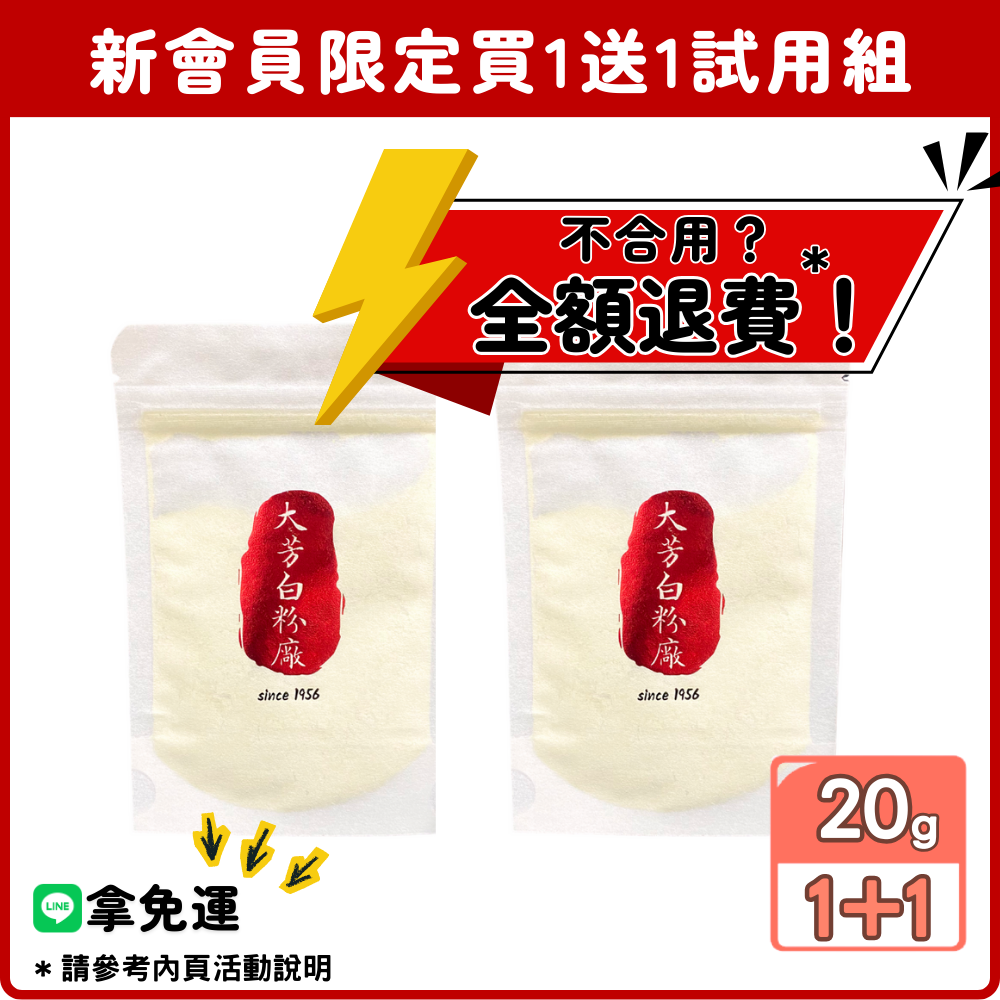
| Sample pack | Checking if you enjoy the white-sulfur mineral experience | Start small; adjust for container and water volume |
| Single-use pack | Occasional use, no stockpiling | Less than full bathtub amount; no need to use the whole pack at once |
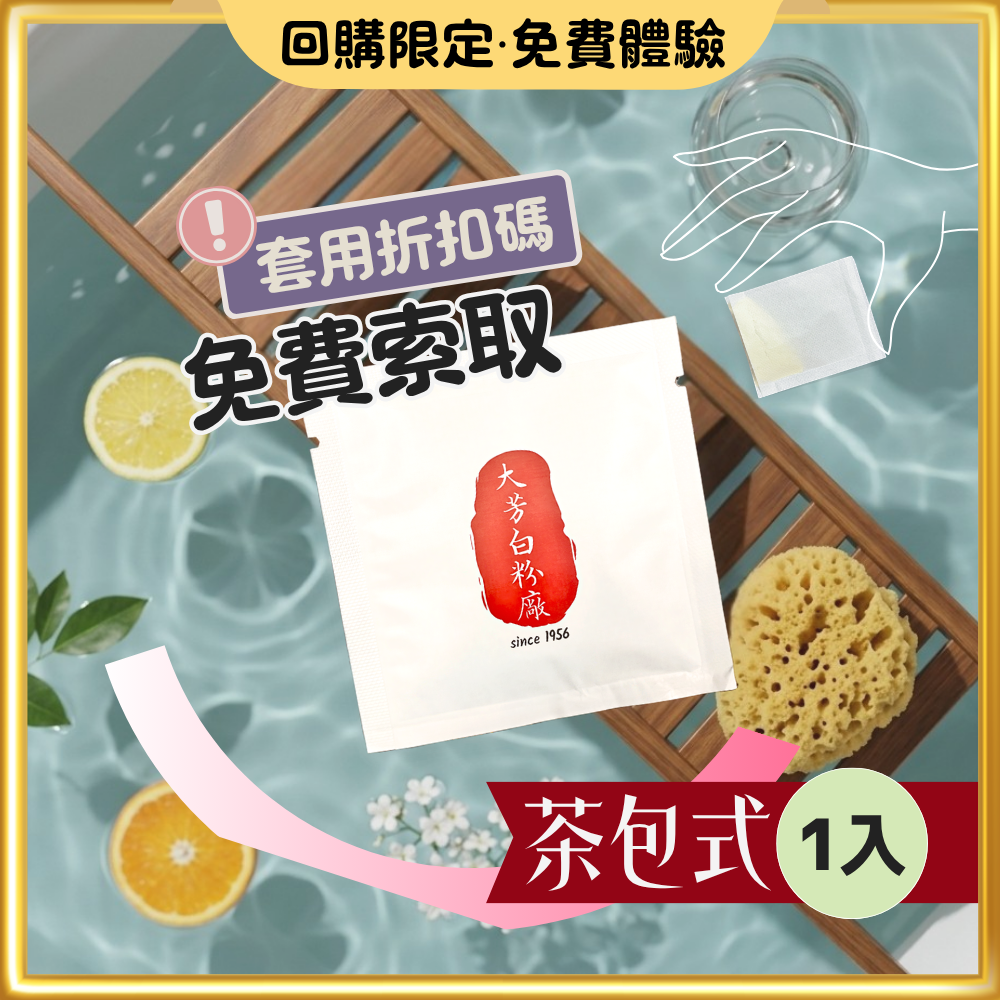
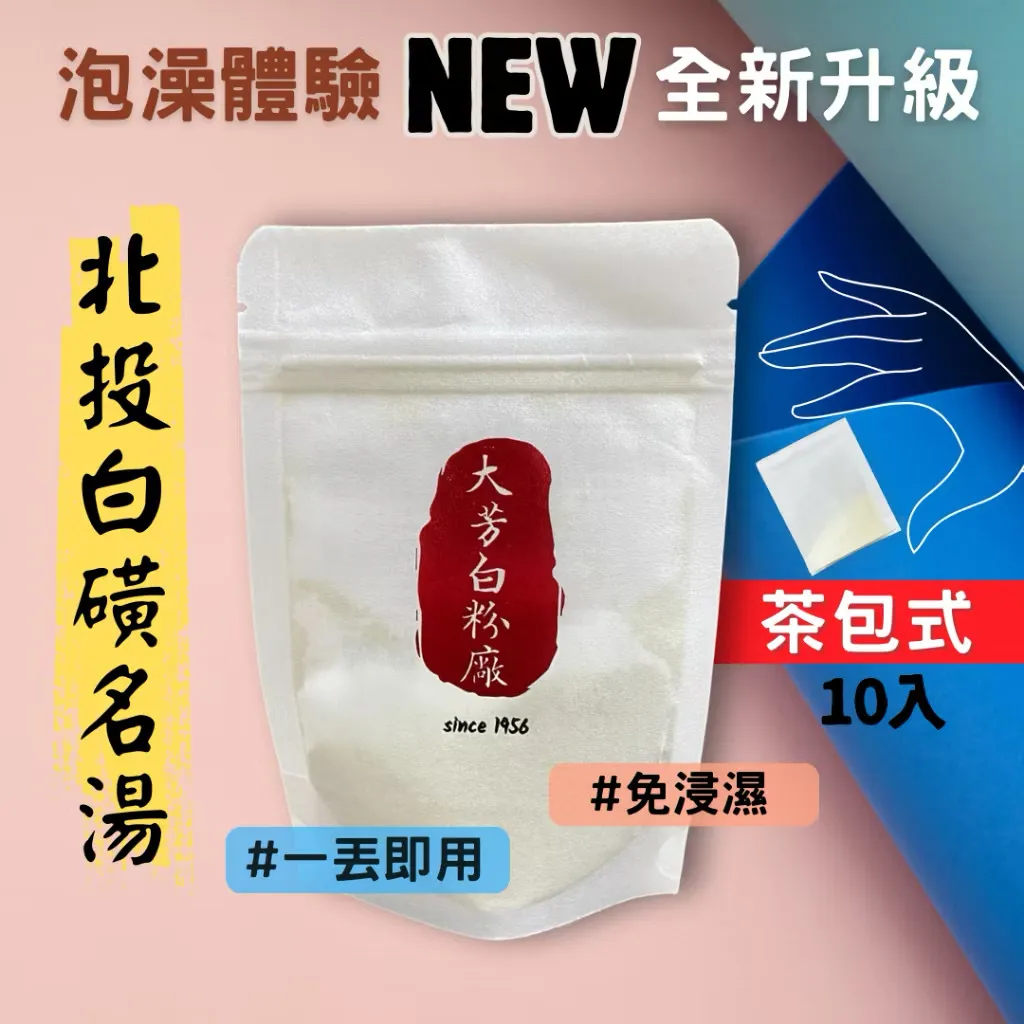
| Improved tea-bag format | Convenience, less powder handling — drop and squeeze | Drop into water and squeeze to release minerals; adjust soak time to taste |
| New customer experience set | Ready to try the medium pack for a sustained period | Activity terms apply as listed on product page |
If you just want to find out whether you like the white-sulfur scent, the milky water color, and the mineral feel, the sample pack or single-use pack is the most pressure-free starting point.
If convenience matters to you — less powder handling, fewer steps — take a look at the improved tea-bag format.
Before you use: white-sulfur onsen powder is not a scented bath product
DaFang 1956 makes Beitou white-sulfur onsen powder. When you use it, a few things are worth knowing upfront:
- Water may turn slightly milky or gray-white. This is the visual effect of white-sulfur minerals entering the water — not a sign something's wrong.
- There will be a faint mineral / white-sulfur scent. It's not a floral fragrance or sweet bath-product smell. Open a window on your first try and see if you like it.
- There may be a small amount of sediment. Natural mineral powders don't dissolve completely clear. Stir before soaking; rinse the container clean afterward.
- Skip the footbath if your skin has open wounds. If you have open cuts, visible broken skin, inflammation, or irritation, hold off until it heals. These aren't flaws — they're what you should know before using a natural mineral product.
FAQ: Common questions about small-volume summer footbaths
Q1: What's a good footbath water temperature in summer?
Start around 38–40°C (100–104°F). Test with the inside of your wrist — if it feels clearly warm without making you pull away, that's a comfortable starting point. Summer doesn't call for the high temperatures winter footbaths sometimes use.
Q2: No footbath tub — can I use a regular basin?
Yes. A regular basin is enough if the water covers the tops of your feet and reaches your ankle. If you want warmth along the lower calf, consider a deeper footbath tub.
Q3: How much DaFang white-sulfur onsen powder do I use for a footbath?
A footbath uses much less water than a bathtub, so use less powder too. Start small for your first try, and adjust based on your container size, water volume, and how it feels. Don't treat any fixed amount as a rule that applies to all containers.
Q4: The water turned milky after adding white-sulfur onsen powder — is that normal?
Yes. White-sulfur minerals create a slightly milky or gray-white color in water. There may also be a small amount of sediment at the bottom. Stir before soaking, rinse the container after.
Q5: First time trying it — which format is least likely to go to waste?
If you're just confirming whether you like it, start with the sample pack or single-use pack. If you want a more convenient experience, check out the improved tea-bag format.
Q6: Can I go straight back into air conditioning after a footbath?
Yes, but dry your feet first, sit for a moment, and then move back toward the air-conditioned area. The point isn't to avoid A/C entirely — just don't let your feet face an air vent right after soaking.
Wrap-up: summer footbaths don't need to be a whole production
A summer footbath doesn't need a bathtub, doesn't need a lot of water, and doesn't need to leave you drenched in sweat.
The lowest barrier: one basin, one fill of water at 38–40°C, 10–15 minutes. For many people, that's already a complete summer home wind-down.
If you'd like to add a touch of Beitou white-sulfur mineral character, start with a low-barrier format:
- First time confirming you like it: Sample pack
- Occasional use, no stockpiling: Single-use pack
- Want a more convenient soak: Improved tea-bag format
Try it once. Decide whether the scent, the water feel, and the ritual fit your life — then decide if it becomes a regular habit.