
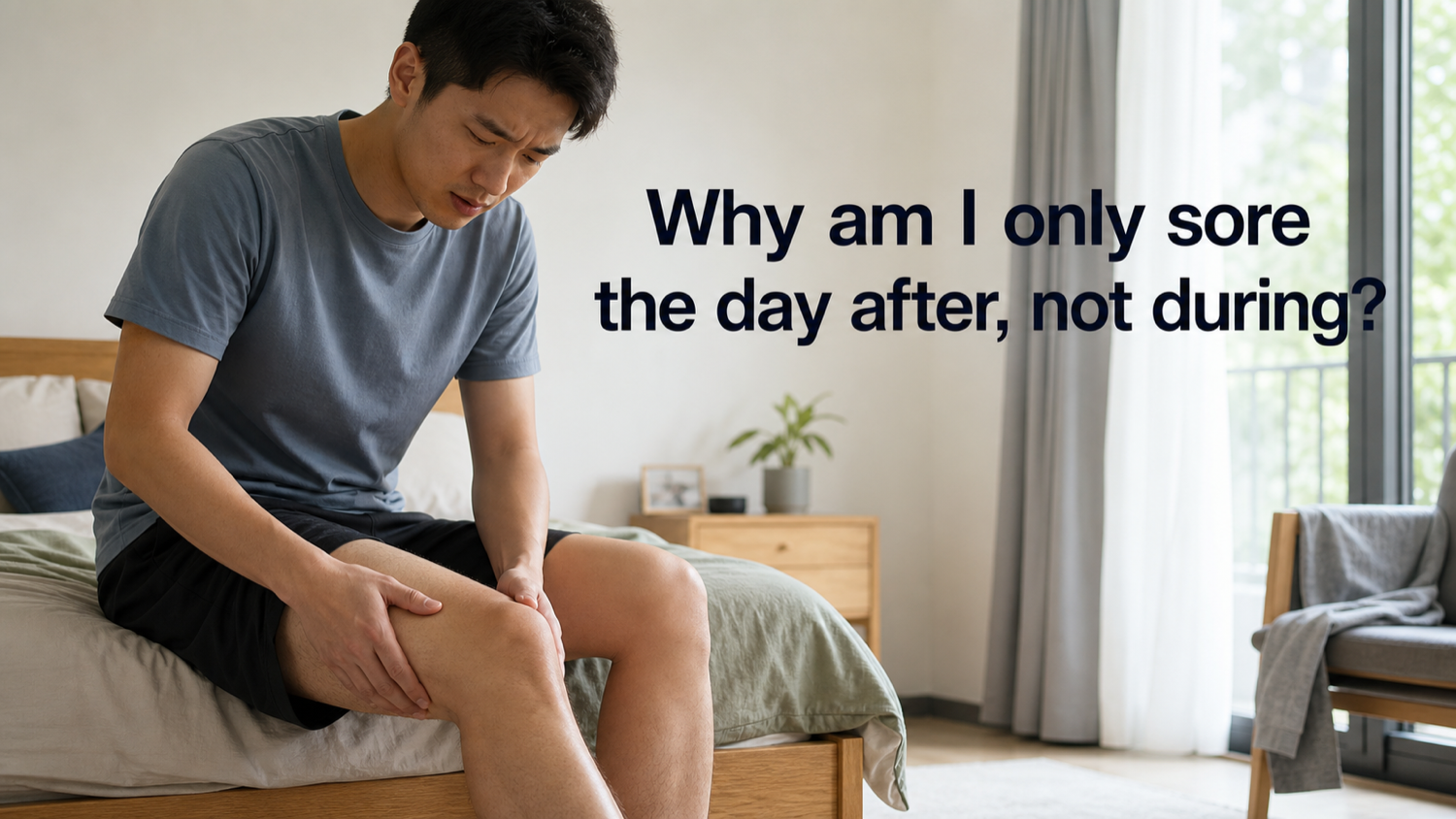
You went hiking or lifted weights yesterday. During the session you actually felt fine, but the next morning your legs feel heavy the moment you get out of bed, and your arms ache the second you raise them. That "felt fine yesterday, sore today" pattern has a name: DOMS, or delayed onset muscle soreness. Online you'll often hear that you must soak in hot water, take a cold plunge, or always stretch, but the research isn't nearly that one-note. This article won't hand you a miracle trick. Instead it separates hot water, cold water, contrast bathing, and stretching so you can see which are backed by research, which are just common habits, and ends with one low-pressure way an ordinary person can start at home.
Quick answer up top
- DOMS is muscle soreness that becomes more noticeable 24-72 hours after exercise. It's common, usually eases on its own, and is not the same thing as an injury.
- No single method has been proven to guarantee that soreness will disappear quickly.
- For most people, sleeping well, rehydrating, and resting first, then picking one method you find comfortable and can actually keep up with, is more practical than chasing "the most effective" one.
- If you just want to ease your body back in once you get home, a gentle hot bath or footbath is usually the lowest-friction place to start.
What is DOMS, and why are you sore the next day rather than during the workout?
DOMS stands for Delayed Onset Muscle Soreness, and it's usually most noticeable 1-3 days after exercise. It tends to show up when you do an unfamiliar movement, suddenly add load, or include more eccentric contractions, for example going downhill, the lowering phase of a squat, or returning to lifting after a long break.
The key point is that it's not the same as the breathlessness and fatigue you feel during the session. That in-the-moment feeling is more like immediate fatigue; the soreness that appears the next day is more related to your body's repair response after handling a load it isn't used to. So "not sore during, sore the next day" is actually very common and doesn't necessarily mean you're injured.
Soreness, fatigue, injury: a rough first split
- Ordinary DOMS: usually symmetrical on both sides, worse the next day, achy when pressed or when moving, easing gradually over a few days
- Plain fatigue: more of a whole-body tiredness and weakness that improves with rest
- Possible injury: sudden severe pain, one very painful spot, obvious swelling, a locked joint, or an inability to produce force
Hot water, cold water, contrast baths, and stretching: the research is asking different questions
The most common misunderstanding is to blur all of these into a single "just soak and you'll recover." But in the research, hot water, cold water, contrast bathing, and stretching are different methods, and the situations they suit are different too.
| Method | Roughly what the research synthesis says | Situations it suits better | What to watch for |
|---|---|---|---|
| Warmth / heat packs / warm water | Some research reviews observe an association between heat therapy and reduced DOMS pain. | Wanting to relax, feel a bit better, wind down with low pressure. | Doesn't mean everyone feels the same effect, and it's not a guarantee of the fastest recovery. |
| Cold-water immersion | Some meta-analyses observe it can lower part of the soreness sensation and certain damage markers. | Congested competition periods, or wanting to take the edge off soreness short-term. | Findings on long-term training adaptation and performance recovery are inconsistent. |
| Contrast hot-cold bathing | Evidence is more scattered; some analyses list it as a secondary option. | People who already have the setup and want to try it. | No need to treat it as required homework. |
| Stretching | Limited help for reducing next-day soreness. | Maintaining range of motion, as a cool-down rhythm. | Don't treat it as a guarantee against soreness. |
Hot water leans toward comfort, not a recovery guarantee
Some meta-analyses and reviews note that heat therapy is associated with reduced pain perception. A 2024 network meta-analysis also observed that within 24 hours after exercise, heat application ranked relatively high for pain relief. But because studies differ so much in temperature, duration, body part, and participant conditions, the steadier reading isn't "hot water is the most effective." It's this: if you already enjoy a hot bath or a footbath, it can be a comfortable, easy-to-sustain way to wind down.
Cold water is more of a situational tool, not necessarily for everyone every day
For cold-water immersion, syntheses from 2022 and 2025 both observed that it may lower part of the soreness sensation and certain muscle-damage-related markers. But it's more of a tool for specific situations than a daily must-do. In particular, for people training long-term for strength or hypertrophy, there may be a trade-off between habitual ice baths and training adaptation, so don't read it as the standard answer everyone should follow.
Contrast bathing isn't wrong, but the evidence is less tidy
Contrast bathing is often treated as an advanced approach, but the current high-quality evidence is more scattered than for heat therapy or cold-water immersion. If you already do it and find it comfortable, keep it; if you don't have the setup, there's no need to feel you're missing out on something.
Stretching has its value, but not as a guarantee against next-day soreness
A 2021 meta-analysis and a 2024 umbrella review both point out that post-exercise stretching has limited clinical significance for "reducing next-day soreness." This doesn't mean stretching is useless. It's better placed in range of motion, body awareness, and cool-down rhythm than used as a promise that "you won't be sore tomorrow."
If you want a low-friction way to wind down without overcomplicating it, you can first look at DaFang's official guide: how to use white-sulfur hot-spring powder.
So what can an ordinary person actually do at home?
Once you lay the research out, the most practical takeaway for most people is actually simple.
- Let your body repair itself first. Sleep, rehydration, and adequate eating are the most basic and most important recovery conditions.
- Move gently if you want to move. Walking, everyday movement, and gentle activity are usually more practical than freezing up completely.
- If you want a bit of ritual, pick one method you find comfortable and can keep up with.
For many people, a hot shower or a footbath after getting home from exercise is a very natural way to wind down. The point isn't to write it up as a treatment; it's to use it as a small action that lets you ease back into your day.
No bathtub? You can start with a low-friction footbath
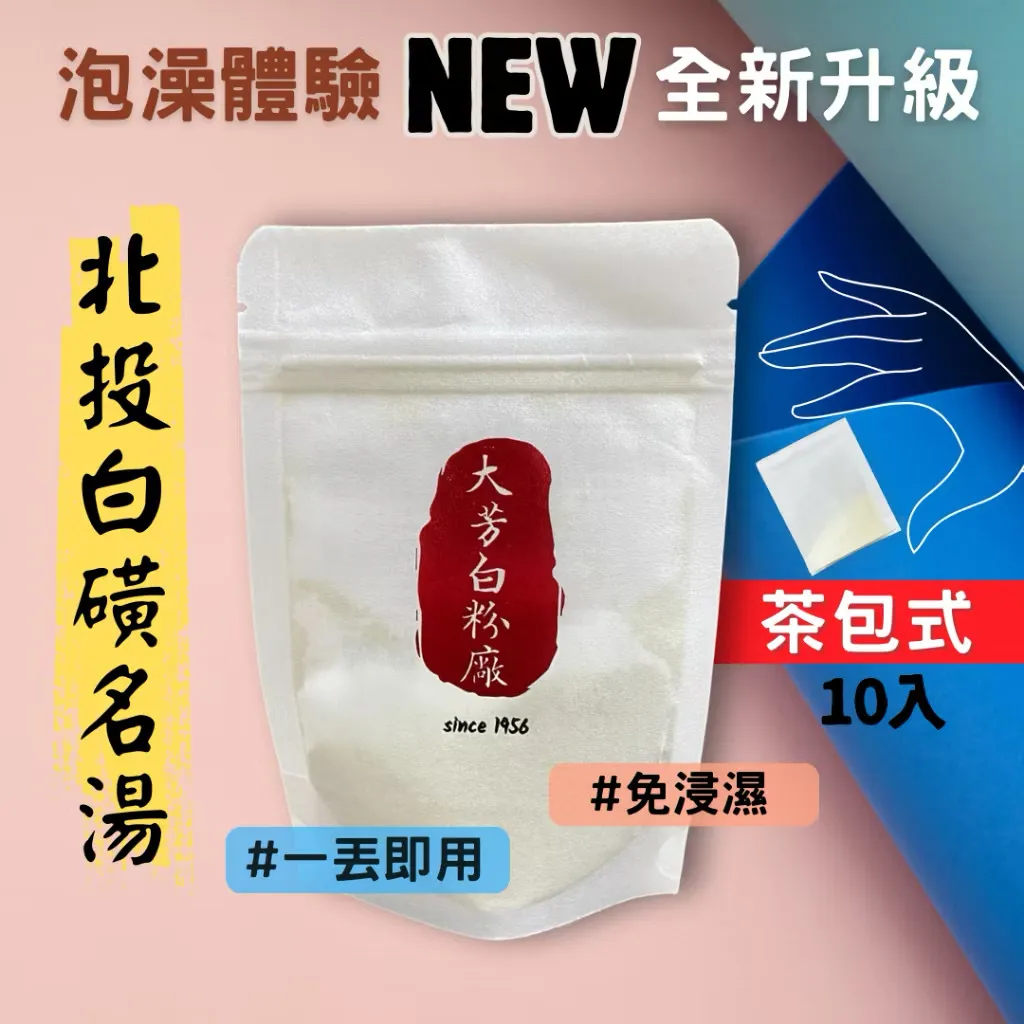
You don't need a full tub. With no bathtub, a basin or a footbath tub works to get started. If you want to make "a warm soak at home" more convenient, you can start from a low-pressure route such as a small-quantity pack or an improved tea-bag format that you drop in and squeeze.
- Want to try a small amount once first: single-use / small-quantity pack
- Want to save on cleanup: tea-bag-style packaging
- Not sure which pack to start with: first-pack chooser guide
When should you not rely on an article alone, and play it safe or see a professional?
Most DOMS resolves on its own, but for the following situations it's not advisable to judge by an article alone:
- Pain that is sudden, sharp, and concentrated at one point
- Obvious swelling, or restricted joint movement
- Pain that persists without easing, or even gets worse
- Pain that doesn't feel like your usual soreness, accompanied by fever or unusual weakness
- Dark-colored urine, severe swelling, or weakness after high-intensity exercise
Put simply: research can help you understand the methods, but it can't replace your own judgment about your body's condition.
FAQ
Q1: What is DOMS?
DOMS is delayed onset muscle soreness, usually more noticeable 24-72 hours after exercise. It's a common body response that eases gradually.
Q2: Does soaking in hot water after exercise help?
Some research reviews observe an association between heat therapy and reduced pain perception. The more reasonable reading is that it may make you feel more comfortable and relaxed, but it's not a guarantee of fast recovery.
Q3: Does soaking in cold water after exercise help?
Some meta-analyses observe that cold-water immersion may lower part of the soreness sensation and certain damage markers, but it's more of a situational tool and not necessarily right for everyone every day.
Q4: Can stretching prevent next-day soreness?
Current research syntheses broadly indicate that stretching has limited help for reducing next-day soreness. You can keep it as a cool-down or range-of-motion routine, but don't treat it as a guarantee.
Q5: Can I do a footbath without a bathtub?
Yes. A basin or a footbath tub is enough to get started. For the full soak method, water temperature, and cold-soak technique, check DaFang's official how-to guide.
Related Reading and Products
- How to use DaFang white-sulfur hot-spring powder
- Single-use / small-quantity pack
- Tea-bag-style packaging
- First time? How to choose a pack
References / Sources
- Kwiecien SY, McHugh MP. The cold truth: the role of cryotherapy in the treatment of injury and recovery from exercise. European Journal of Applied Physiology. 2021 and later synthesis context used in reviewed source pool.
- Machado AF, Ferreira PH, Micheletti JK, et al. Can water immersion improve recovery from exercise? Sports Medicine. 2022 synthesis context used in reviewed source pool.
- Afonso J, Clemente FM, Nakamura FY, et al. The effects of stretching on delayed onset muscle soreness. Frontiers in Physiology. 2021.
- Journal of Rehabilitation Medicine. 2024 network meta-analysis on heat and cold interventions for DOMS pain relief.
- Frontiers in Physiology. 2025 network meta-analysis on cold-water immersion dose and exercise-induced muscle damage recovery.
- Wiecha S, et al. 2024 umbrella review on stretching and DOMS effectiveness boundaries.