
A travel note worth saving: five high-value Japanese onsen towns perfect for hot summer days — scenery, culture, and food included. Can't travel right now? At the end you'll find a way to recreate a sulfur-spring soak at home, turning travel inspiration into a daily ritual.
- Summer doesn't require a long, hot, full-tub soak — a small-water footbath or short ritual works well.
- No bathtub, or don't want a long soak? Start with a footbath.
- First time with white-sulfur powder? Start with a small amount and a short time to check the scent and temperature.
Why Do Japanese People Soak Even in Summer?
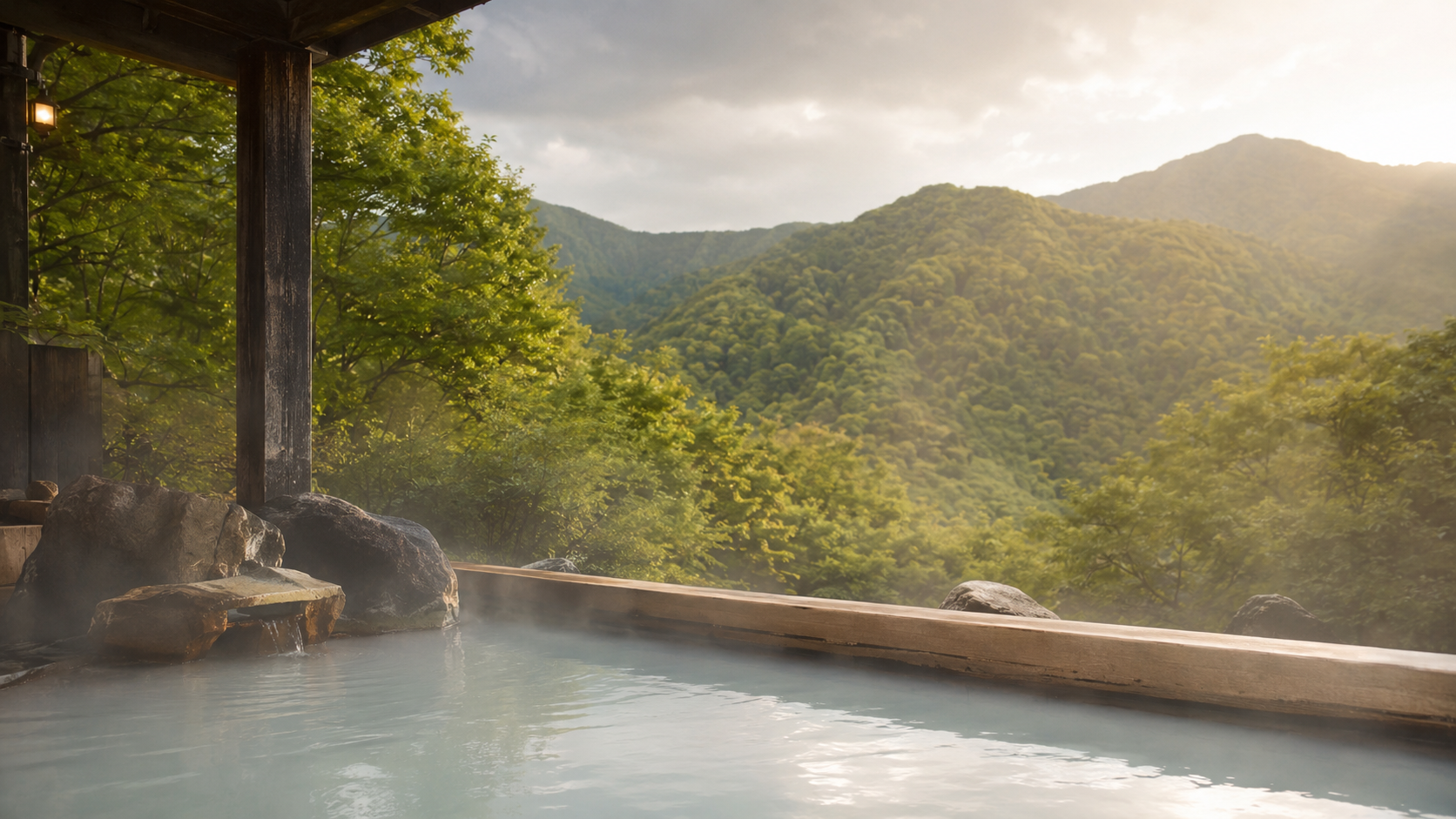
In Japan, hot-spring bathing isn't only a winter thing — it's a year-round ritual for resetting your rhythm. In summer, after moving between air-conditioned rooms and outdoor heat (sticky with sweat), a comfortably warm soak brings a clean, relaxed, mood-resetting feeling. Common personal experiences people mention (they vary by person):
- 🌿 A fresh, no-longer-sticky feeling after rinsing off
- 🧠 A quiet moment to slow down — a calm wind-down before bed
- ☁️ A way to feel light again on humid, muggy days
Note: this article summarizes general lifestyle knowledge and third-party research about warm baths, footbaths, and relaxation rituals. It is not a claim that DaFang products detox, aid sleep, treat, or improve any condition. DaFang is a natural bathing product, not a medical product. For ongoing sleep issues or health concerns, seek professional advice.
Further reading: How warm is a 41°C footbath? Water temp, timing & a pre-sleep ritual
5 High-Value Japanese Summer Onsen Towns (Sights + Food)
1. Noboribetsu Onsen (Hokkaido)
🌡 Cool summers, great for outdoor soaking | ♨ Hell Valley geothermal + sulfur springs | 🍱 Try: onsen tofu, mountain-vegetable miso soup | 📸 Jigokudani, evening "ghost-fire path" walk
In southern Hokkaido, about 1.5 hours from Sapporo, Noboribetsu is one of the region's richest sulfur-spring areas, with 9–11 spring types and the dramatic geothermal landscape of Jigokudani (Hell Valley). Even in cool summers, the steam drifting through the greenery makes for a refreshing outdoor bathing atmosphere. Arrive in the evening to soak and cool down, stroll Hell Valley at night, then enjoy onsen tofu and mountain-vegetable dishes.
2. Kusatsu Onsen (Gunma)
🏔 Cool highlands, a Tokyo summer escape | ♨ The famous acidic "Yubatake" field, magical at night | 🍡 Try: onsen manju, grilled senbei | 🛍 Old town, Yubatake plaza
At around 1,200 m, Kusatsu is a popular summer escape for Tokyoites. Its highly acidic "Yubatake" hot-water field is iconic, and the night-lit Yubatake with open-air baths creates a wonderful mountain atmosphere for relaxing and photos. Catch the traditional "yumomi" (stirring the water to cool it) and a mountain-trail walk; the town has dozens of bathhouses and public footbaths. Don't miss onsen manju and street-grilled senbei.
3. Hakone Yumoto (Kanagawa)
🚄 Easy from Tokyo, perfect weekend trip | ♨ Milky sulfur springs, many riverside open-air baths | 🍢 Try: onsen eggs, oden tempura | 🖼 Hakone Glass Museum, old highway
One of Kanto's best-known onsen towns, just ~90 minutes from Tokyo. Springs are varied, with milky sulfur water a highlight; many inns have riverside open-air baths where you soak amid the valley's flowing water and greenery. Summer avoids the winter crowds. Beyond soaking, explore the old Hakone highway and shopping street, try onsen eggs and oden tempura, and visit the Glass Forest or Open-Air Museum.
4. Beppu Onsen (Oita)
🔥 Many spring types, plus sand & steam baths | ♨ The spectacular "Eight Hells" | 🍮 Try: hell-steamed pudding & seafood | 🌋 Sea Hell, Blood Pond Hell
Kyushu's largest onsen city, with over 2,000 sources — among the highest spring output in the world. The signature sights are the "Beppu Hells" tour: Blood Pond Hell, Tornado Hell, Sea Hell and more, each a different color and temperature. Spring types are diverse (sulfur, bicarbonate, iron), each with its own character. In summer, try the steam baths (jigoku-mushi) and sand baths for a relaxing slow-down. Hell-steamed seafood and vegetables are a must, and affordable public baths and inns make it great for budget and deep travelers alike.
5. Yufuin (Oita)
🌄 Cool highland air, lovely for walks | ♨ Design-forward bathhouses, artsy vibe | 🍛 Try: omurice curry, fresh-milk ice cream | 🎨 Yunotsubo street, Lake Kinrin
In central Oita, Yufuin blends art, hot springs, and nature. Unlike bustling Beppu, it's known for a quiet, artsy mood loved by couples and solo travelers. Summer is pleasant; stroll Yunotsubo street past boutiques and dessert cafés. Springs are mostly clear and mild, and many design-led inns frame views of Lake Kinrin or Mt. Yufu. Try omurice curry, fresh-milk ice cream, and handmade sweets — perfect for photos and unwinding.
Quick Comparison
| Item | Noboribetsu | Kusatsu | Hakone | Beppu | Yufuin |
|---|---|---|---|---|---|
| Coolness 🌡 | ★★★★★ | ★★★★☆ | ★★★☆☆ | ★★☆☆☆ | ★★★★☆ |
| Value 💰 | ★★☆☆☆ | ★★★★☆ | ★★☆☆☆ | ★★★★☆ | ★★★☆☆ |
| Scenery 🏞 | Geothermal valley | Yubatake | Riverside baths | "Hells" | Highland town |
| Food 🍱 | Onsen tofu | Manju | Oden | Steamed pudding | Omurice curry |
| Photogenic 📸 | ★★★★☆ | ★★★★☆ | ★★★★★ | ★★★☆☆ | ★★★★★ |
Can't Travel Abroad? Recreate a Beitou White-Sulfur Soak at Home
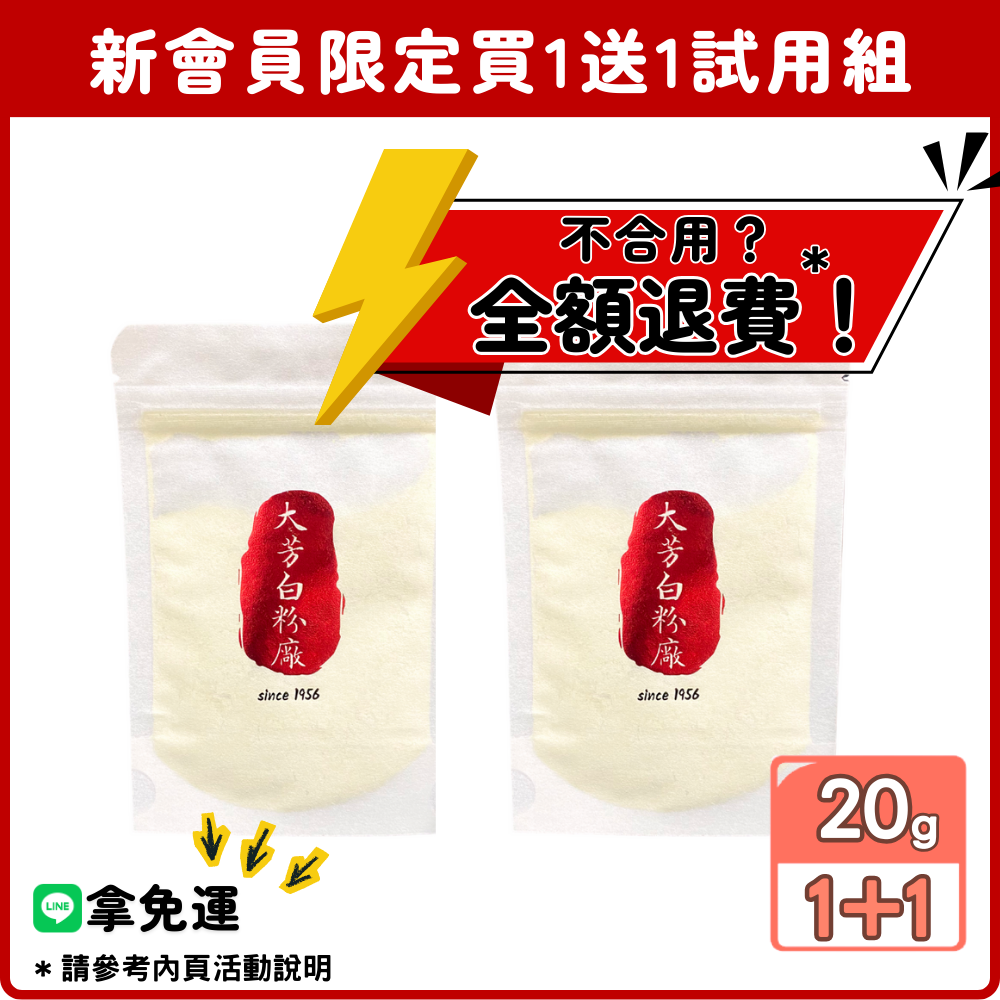
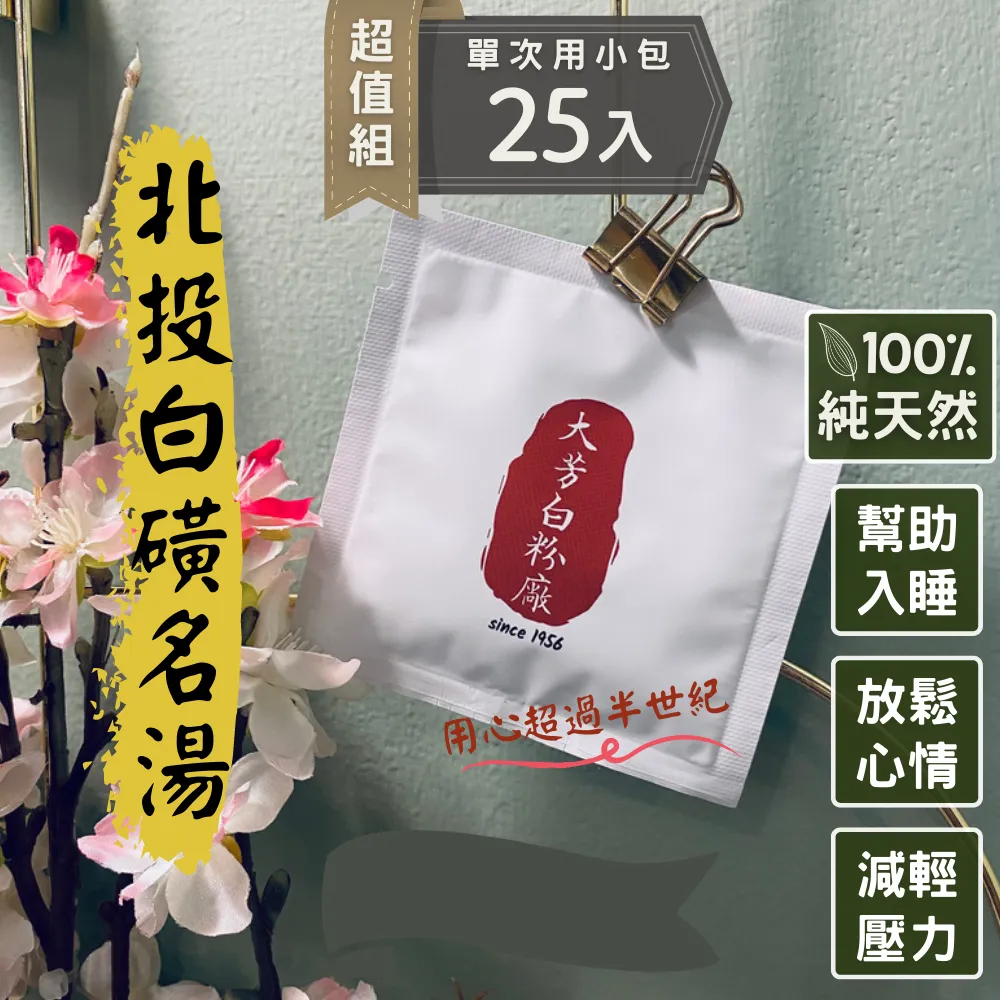
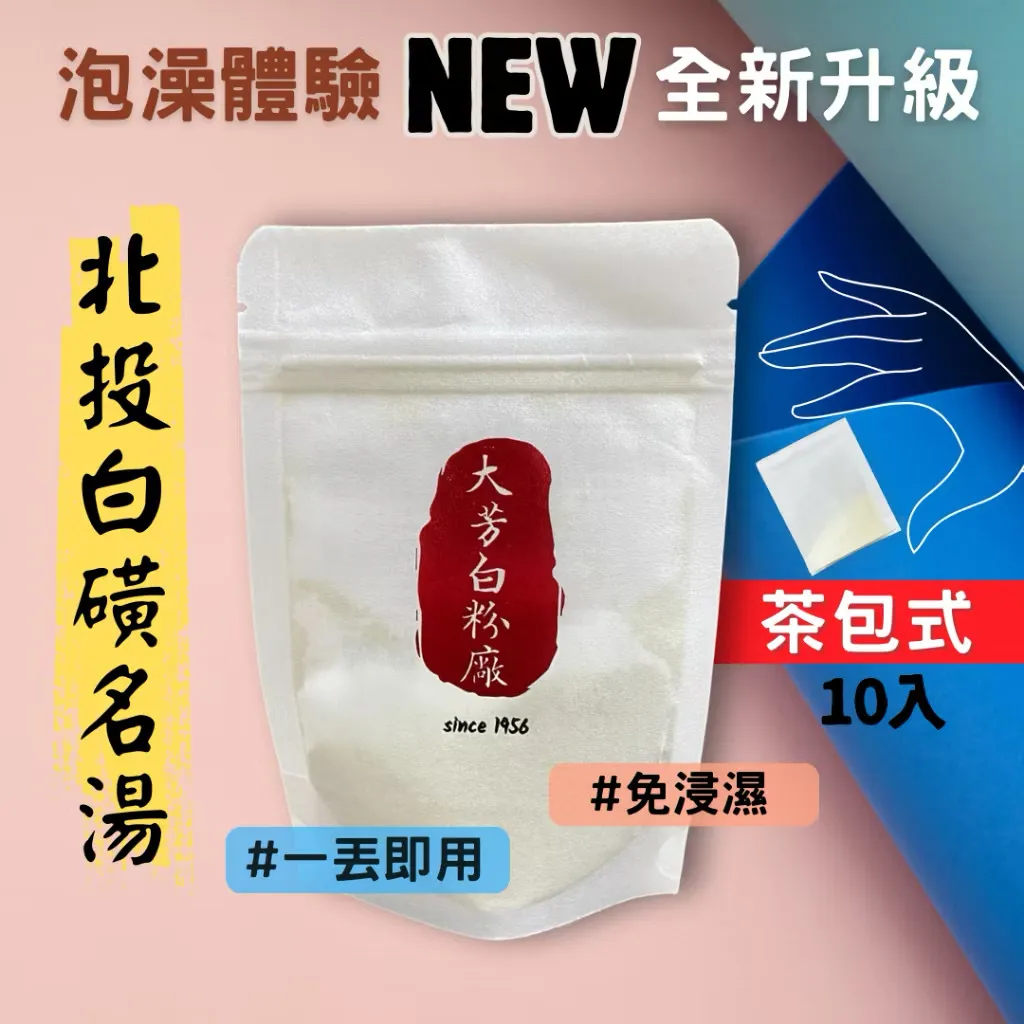
If you've soaked in the rich sulfur springs of Noboribetsu or Beppu, you know that faint, reassuring aroma. Taiwan's Beitou white-sulfur springs belong to a similar sulfur-spring family. Even without flying to Japan, opening a pack of natural white-sulfur powder brings that familiar scent home — less a bath than a small journey by aroma.
Suggested use:
- Footbath: ~38–42°C for 10–15 minutes
- Full bath: add about 25g or more
- Set the mood: soft music, a wind chime, a warm low light
Third-party research explores links between warm bathing and relaxation/sleep (general background, not a DaFang product claim; effects vary by person).
FAQ
Q1: Isn't a summer soak too hot?
Not really. Choose highland or mountain onsen with mild water (~38–40°C) and it feels refreshing. At home, keep the water on the lower side and the time short.
Q2: Where's best for summer onsen travel in Japan?
High-altitude, cool towns like Noboribetsu (Hokkaido), Kusatsu (Gunma), and Yufuin (Oita) — great scenery and food.
Q3: Is a pre-bed soak related to sleep?
Third-party research explores links between warm baths/footbaths and relaxation and sleep (general background; effects vary). DaFang makes no therapeutic or sleep-aid claim. For sleep concerns, consult a professional.
Q4: What should I use for an at-home soak?
A Beitou white-sulfur powder with natural sulfur and minerals can recreate a scent and feel similar to sulfur springs like Noboribetsu or Beppu — good for footbaths and full baths.
DaFang is a natural bathing product, not a medical product; it makes no therapeutic claims and does not claim to detox, aid sleep, improve circulation or immunity, or treat any condition. If your skin is irritated or broken, or you are pregnant, buying for a child, or managing a chronic condition, consult a professional before use.