
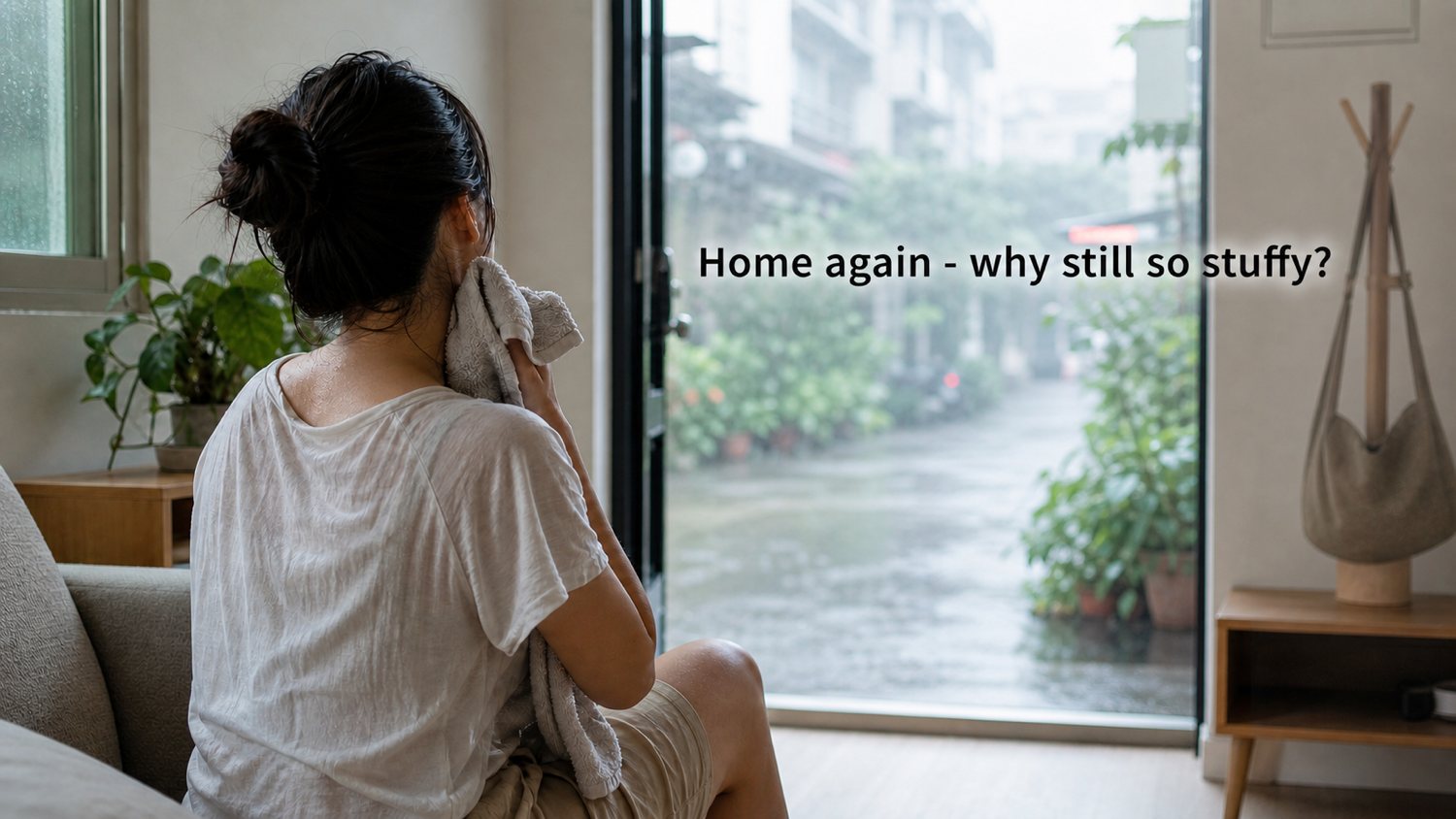
You come home on a summer evening, turn on the air conditioner, and still feel sticky, heavy, and strangely stuffy. It does not always mean you are too sensitive or simply tired. Humidity, airflow, indoor-outdoor temperature changes, and the way your body loses heat can all shape how you feel after getting home.
This article explains the body-feel side in plain language, then offers a few low-pressure ways to settle in at home.
The Short Answer
- Feeling stuffy is not only about temperature. Humidity matters because sweat evaporates more slowly in humid air, making the same temperature feel hotter and stickier.
- Air conditioning helps, but it is not the whole picture. If humidity stays high, or if you have just come back from humid outdoor air, your body may need time to adjust.
- A low-pressure first step after getting home can be: drink water, change into dry breathable clothes, lower your activity level, keep the room cool and ventilated, then wash or shower if needed.
- Showering, foot bathing, or bathing can be optional personal relaxation habits. They are not medical methods or body-regulation tools.
- If you feel dizzy, nauseous, unusually fast heartbeat, hot skin, confusion, or other heat-related warning signs, move to a cool place, hydrate, reduce heat exposure, and seek professional help when needed.
Why can you still feel stuffy after getting home?
Your body is constantly trying to release extra heat and keep itself within a stable range. The World Health Organization explains that heat strain is affected by air temperature, humidity, wind speed, radiant heat, clothing, and heat produced by the body itself.
In other words, how hot or stuffy you feel is never just the number on a thermometer.
When you come home from humid outdoor air, your body may still be processing the heat load from earlier in the day while adjusting to a different indoor environment. That sense of not being fully settled yet can be understood as a body-feel transition, not as an overreaction.
Daily temperature changes can make this more noticeable: humid outdoor air, a cold office or train, humid streets again, then home. Moving between those environments can make your body feel unstable for a while.
This article is about daily body feel and environmental load. It is not a medical diagnosis, and it does not claim that any product can solve the issue.
What roles do humidity, heat, airflow, and air conditioning play?
Humidity: one of the main reasons stuffiness feels worse
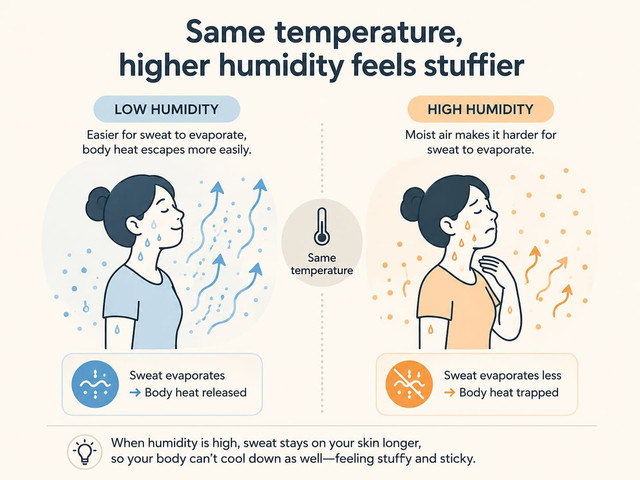
One important way the body loses heat is through sweat evaporation. The U.S. National Weather Service explains heat index by combining air temperature and relative humidity to describe how hot it feels to the human body.
When humidity is high, sweat does not evaporate as easily. Heat loss becomes less efficient, so the temperature may not look extreme while the body still feels sticky, heavy, and stuffy.
Heat: your body is doing real work
Heat is not trivial. A 2021 Lancet review on hot weather and heat extremes explains that the body responds to heat through processes such as changes in skin blood flow and sweating.
In plain language, when you feel like your body is still busy, it may actually be working through environmental heat load.
Airflow: a small but real support for comfort
Air movement can affect how heat leaves the body. Gentle airflow can support evaporation. A closed, stagnant, humid room can feel heavy even when the temperature is not at its highest.
Air conditioning: helpful, but only one part of body feel
Air conditioning lowers air temperature, which can reduce environmental heat load. But it does not automatically solve every part of the body-feel equation.
If indoor humidity stays high, comfort may not improve as much as expected. If you have just come in from a hot, humid environment, your body also needs time to adjust. Feeling stuffy even with the AC on is not contradictory. It simply means temperature is only one part of the picture.
What can you do first after getting home?
CDC guidance on heat and health is practical: stay cool, stay hydrated, reduce activity, use shade or air conditioning, and pay attention to warning signs.
For an after-home routine, that can look like:
- Drink some water first.
- Change into dry, breathable clothing.
- Lower your activity level instead of rushing into chores or exercise.
- Keep the room cool and let air move when possible.
- Wash or shower if sweat and stickiness make you uncomfortable.
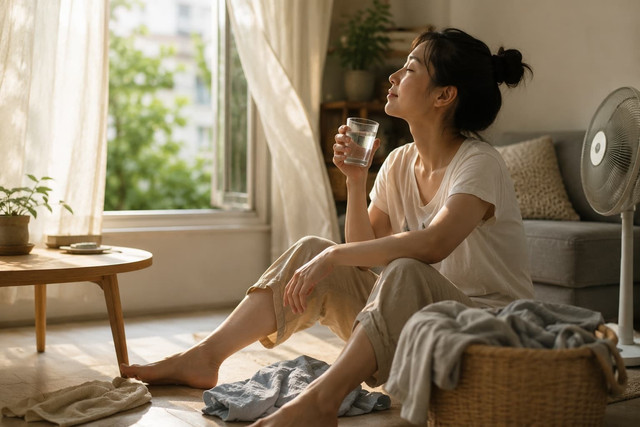
The logic is simple: reduce stimulation from the environment and from your own activity so your body has better conditions to feel comfortable again. You do not need to do everything. Start with one or two steps that feel easy.
Where do showers, foot baths, and baths fit?
Some people like using a warm shower, foot bath, or bath as a personal way to slow down after getting home. That can be a valid personal habit, but the boundary matters.
- It is an optional relaxation habit, not a medical treatment.
- It should not be described as guaranteeing health effects or handling heat risk.
- If you already feel overheated, dizzy, nauseous, or unwell, the priority is a cool environment, hydration, reduced activity, and professional help when needed.
With that boundary, if you simply want a low-pressure home habit, or you do not have a bathtub and prefer to start with a foot bath, treat it as part of your personal rhythm rather than a tool for solving a health problem.
FAQ
Q1. Why does high humidity make me feel stuffier?
Because the body relies partly on sweat evaporation to release heat. In humid air, sweat evaporates more slowly, so heat loss becomes less efficient and the same temperature can feel hotter and stickier.
Q2. If the room is air-conditioned, why do I still feel heavy after coming home?
Air conditioning lowers air temperature, but humidity, airflow, and your recent outdoor exposure still matter. Your body may need time to adjust from humid outdoor heat to indoor air.
Q3. Should I shower first or rest first after getting home?
It depends on how you feel. If you are sweaty and sticky, drinking water, changing clothes, and washing can feel refreshing. If you feel overheated, dizzy, or unwell, sit in a cool place, hydrate, and reduce activity first.
Q4. What if I do not have a bathtub?
You can still start with simpler steps: hydrate, change into dry clothes, reduce activity, and keep the room cool and ventilated. If you like the calming feel of warm water, a foot bath is a lower-barrier option.
Q5. What do terms like bath additive, hot spring powder, tanghua, and white sulfur usually mean?
They are usually product-category and usage questions: what it is made of, what it feels like, how to clean up, whether it works for foot bathing or bathing, and how to begin. They are separate from the question of why you feel stuffy after getting home.
Q6. When is stuffiness just discomfort, and when should I pay attention to heat risk?
Daily stickiness and heaviness are often body-feel discomfort. But dizziness, nausea, headache, rapid heartbeat, cramps, hot skin, inability to sweat, or confusion can be heat-related warning signs. Move to a cool place, hydrate, cool down, and seek professional help when needed.
Next Step
If you want a low-pressure habit after getting home, you do not need to buy a full set immediately. Start with the DaFang usage guide, then decide whether a single-use pack, sample, or tea-bag style format fits your space and routine.
- Usage guide: How to use DaFang white-sulfur onsen powder
- Single-use pack: Single-use light pack
- Tea-bag style pack: Upgraded tea-bag style
- FAQ: Frequently asked questions
Related reading
- Stuck in A/C all day, scorched outside — how to soak your feet when you get home? A small-volume footbath beginner's guide
- No Bathtub? No Problem. A Complete Guide to Foot Baths, Half Baths, and Full Baths with Beitou White Sulfur Powder
- What Is Noon Water? How a Dragon Boat Festival Cleansing Custom Becomes a Modern Home Footbath Ritual